
具体描述
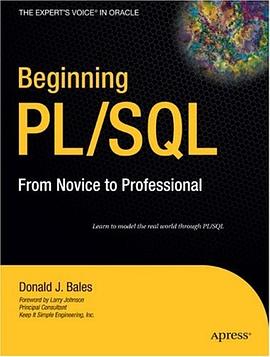
Get started with PL/SQL, the built-in language that every Oracle developer and database administrator must know, in Beginning PL/SQL, a fast-paced and example-filled tutorial. Learn from author <strong>Don Bales</strong>' extensive experience to discover the most commonly used aspects of PL/SQL without wasting time with obscure and obsolete features. </p>
Author <strong>Don Bales</strong> takes his 20+ years of experience and a wealth of statistics he's gathered on PL/SQL usage over those years and applies the 80/20 rule -- cover what's most needed and used by PL/SQL professionals and avoid what's not necessary! The result is a book that covers all the key features of PL/SQL without wasting your time discussing esoteric and obsolete parts of the language. Learn what really matters, so that you can get to work feeling confident with what you know about PL/SQL.</p>
<strong>Discover the 20% of PL/SQL that gives you 80% of the bang</strong>--key topics covered include variables and datatypes, executing statements, working with cursors, real-world objects, debugging, testing, and more.
<strong>Learn how to write production-level, object-oriented PL/SQL</strong>--you'll explore relational PL/SQL, but unlike most other books on the subject, <strong>Don Bales</strong> emphasizes the use of PL/SQL's object-oriented features as well.
<strong>Work through real examples of using of PL/SQL</strong>--you'll learn PL/SQL by applying it to real-world business problems, not by heavy theory. <h3>What you'll learn</h3>
How important SQL is in PL/SQL
How to use PL/SQL in both a relational and object-relational setting
How to create maintainable, modular, and reusable PL/SQL program units
The importance of testing as you go, and of building a permanent test plan for each module
The importance of building debugging capabilities into your code and building a permanent debug facility for each module
The importance of documenting as you go, and in the process building a permanent documentation set for your reusable modules
How to apply modular PL/SQL to solve real-world problems <h3>Who is this book for?</h3>
Anyone who wants to learn how to create stored procedures against an Oracle database using PL/SQL. Programmers developing applications to be deployed against an Oracle database will need PL/SQL to take full advantage of the power Oracle has to offer. Database administrators who wish to implement functionality exposed only via PL/SQL package interfaces will also find this book useful.</p> <h3>About the Apress Beginning Series</h3>
The Beginning series from Apress is the right choice to get the information you need to land that crucial entry-level job. These books will teach you a standard and important technology from the ground up because they are explicitly designed to take you from "novice to professional." You'll start your journey by seeing what you need to know--but without needless theory and filler. You'll build your skill set by learning how to put together real-world projects step by step. So whether your goal is your next career challenge or a new learning opportunity, the Beginning series from Apress will take you there--it is your trusted guide through unfamiliar territory!</p> <h3>Related Titles</h3>
Mastering Oracle SQL and SQL*Plus
Expert Oracle Database Architecture: 9i and 10g Programming Techniques and Solutions
作者简介
目录信息
读后感
用户评价
这本书的排版和学习体验绝对是五星好评!在我开始阅读之前,我对技术书籍往往需要准备厚厚一叠笔记本、随时准备查阅各种术语定义感到头疼。但这本书的排版设计非常注重读者的视觉感受和学习节奏。代码块的格式清晰、注释到位,关键概念部分使用了不同的字体或背景色突出显示,使得阅读过程中的信息抓取效率极高。更妙的是,每章末尾的小测验和“思考题”设计得非常巧妙,它们不是那种机械性的死记硬背考题,而是要求读者对所学知识进行综合运用和分析。我发现自己常常会停下来,在草稿纸上绘制流程图来验证我对存储过程调用栈的理解。这种“主动学习”的氛围,极大地增强了知识的内化过程。读完一章后,我感觉自己不是被动接收信息,而是真正地参与了一场知识建构的过程。
坦白说,我购买这本书的初衷是想找一本能够快速提升我现有SQL技能,并将其扩展到过程化编程领域的工具书。我之前主要依赖在线文档和零散的博客文章学习,导致知识体系非常碎片化。这本书的结构清晰得令人印象深刻,它不像某些技术手册那样干巴巴地罗列语法,而是将每个模块的讲解都融入到一个连贯的叙事流程中。尤其是在错误处理和事务管理的章节,作者的处理方式极其老道和务实。他没有仅仅停留在如何捕获异常,而是深入探讨了在企业级应用中,如何设计健壮的、可审计的错误恢复机制。我将书中关于异常处理的代码片段应用到我正在维护的一个遗留系统中,显著提升了系统的稳定性。这种将理论与高级实践紧密结合的写作风格,对于有一定基础、渴望突破瓶颈的开发者来说,价值无可估量。它真正做到了“授人以渔”,让我有能力去设计更复杂、更可靠的数据库应用逻辑。
这本书简直是为我量身定做的!作为一名刚刚接触数据库编程的新手,我一直都在寻找一本既能打好扎实基础,又不会让人望而生畏的入门教材。幸运的是,我找到了它。作者在讲解概念时,总是能用非常直观的比喻,把那些一开始听起来很抽象的PL/SQL语法结构,比如游标、存储过程和触发器,变得清晰易懂。我特别欣赏它循序渐进的教学方式,从最基础的变量声明和控制结构开始,一步步引导读者进入更复杂的逻辑构建。书中的例子都非常贴合实际工作场景,让我立刻就能感受到学到的知识是如何在真实环境中发挥作用的。我已经跟着书上的练习动手操作了好几遍,每一次都能发现自己理解上的盲点,然后通过书中的详细解释迎刃而解。对于想从零开始建立起对Oracle数据库后端编程信心的读者来说,这本书无疑是最佳的领航员。它不仅教会了我“怎么做”,更重要的是教会了我“为什么这么做”,这种对底层原理的深入挖掘,是很多市面上同类书籍所缺乏的。
这本书的叙事风格非常具有个人魅力,读起来完全没有传统技术书籍那种枯燥乏味的感觉。作者似乎非常了解读者在学习过程中会遇到的那种“卡住”的感觉,总能在最关键的地方插入一些幽默的、充满生活气息的类比来解开困惑。比如,他对“包(Package)”的介绍,就将其比喻成一个功能齐全的工具箱,将相关的过程和函数井井有条地封装在一起,既方便查找又避免了相互污染。这种富有人情味的表达方式,让学习PL/SQL这个听起来很“硬核”的技术过程变得轻松愉快。我经常在晚上读累了的时候,被作者某个恰到好处的玩笑逗乐,瞬间又重新燃起了继续钻研下去的动力。这本书不仅是一本技术手册,更像是一位经验丰富、耐心十足的导师在陪伴你成长,让你在学习的旅途中始终保持积极的心态和探索的热情。
作为一名资深的数据架构师,我通常对市面上那些针对初学者的“入门指南”持保留态度,但这本书的深度和广度超出了我的预期。我关注的重点往往在于性能优化和大规模数据处理。这本书在讲述循环结构和集合操作时,并未简单停留在“能用”的层面,而是深入剖析了不同实现方式在Oracle执行引擎下的性能差异。例如,它对隐式游标和显式游标的内存占用对比分析,以及使用`FORALL`批量操作的效率优势,都有详尽的基准测试和解释。这对于我们这种需要处理海量数据批处理任务的团队来说,是至关重要的参考信息。我发现自己过去凭直觉写的一些代码,其实在性能上存在很大优化空间。这本书提供了一种系统性的思维框架,帮助我们从“编写能跑的代码”进化到“编写高效、可维护的代码”。它成功地搭建了一座连接基础语法和企业级性能调优之间的桥梁。