
具体描述
From Publishers Weekly
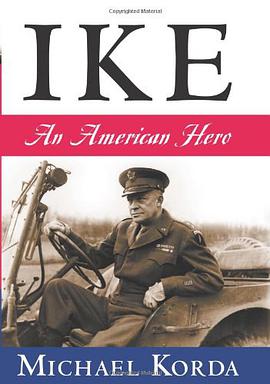
Characterizing Dwight Eisenhower as an American with a big grin and long-limbed, loose American way of walking, this smitten biography demonstrates his heroism by dwelling on his World War II record as commander of Allied armies in Europe. Korda (Ulysses S. Grant) defends the people's general against criticisms leveled by subordinates and historians (Eisenhower's presidency flits by in an admiring 64 pages), but for all his fulsome comparisons of Eisenhower to Napoleon and Grant, the author's case is weak. Korda's approving gloss on Ike's broad front approach—directing all the Allied armies to engage the enemy at every point... until superior numbers inevitably ground the Germans down because he did not think a single, clever stroke would do it—makes Eisenhower sound like a terrible strategist. At best, Ike comes off as a competent diplomat-in-arms, enabling egomaniacs like Churchill, De Gaulle, Montgomery and Patton to cooperate, and soothing wife Mamie's anxieties over his glamorous secretary. Unfortunately, Eisenhower's self-effacing affability in this role means his story is usually upstaged by the colorful prima donnas around him. A more critical analysis might have made for a more interesting biography. Photos. (Aug. 21)
Copyright © Reed Business Information, a division of Reed Elsevier Inc. All rights reserved.
From The Washington Post's Book World/washingtonpost.com
Reviewed by John Whiteclay Chambers II
Michael Korda, successful editor, novelist and memoirist, knows a good and timely story when he sees one. What could be more appealing today to Americans, divided, trapped in an unpopular and seemingly unwinnable war, than a fresh and inspiring account of U.S. leadership in World War II?
Ike is a valentine to "an American hero," Dwight Eisenhower, who rose from humble roots in Abilene, Kan., to become the Supreme Commander of the Allied Expeditionary Forces and later two-term president of the United States. "Like Grant and Lincoln," Korda writes, "Ike was one of the people; and he had made good without ever losing sight of what he was and where he came from." He inspired millions, and this book's implicit message is that Ike's underrated style of leadership could help Americans regain what has been lost today:
"Something about his big grin; his long-limbed, loose American way of walking . . . his easy, familiar way of speaking to everybody from King George VI down to privates in both armies; his lack of pretension; his evident sincerity; and his willingness to accept unimaginably heavy responsibility made people like Ike. They were willing to be led by him. . . . They trusted him."
As in his earlier, brief biography of Ulysses S. Grant, Korda is especially interested in how the personality and character of his subject developed and affected subsequent achievements, particularly in the chaos and competition of war. Nearly half the book deals with Eisenhower's prewar career, including his many frustrations in the small and "feudal" officer corps of the interwar years.
Yet Eisenhower gained patrons who recognized his formidable intelligence, integrity and sense of duty and, behind the affable, self-effacing mask, his toughness, self-assurance and driving ambition. Douglas MacArthur, who exploited him, was not among Ike's boosters. But Fox Connor mentored him, and George Marshall oversaw Ike's rocketing advancement from lieutenant colonel in 1941 to four-star general in 1943.
The Western allies may have had senior generals with sharper geostrategic vision than Eisenhower (for example, America's George Marshall and Britain's Alan Brooke) and with more battle experience (George Patton, Bernard Montgomery, Harold Alexander), but after the North African invasion of 1942, none had anything like Eisenhower's record of both leading an alliance and supervising huge, daring military operations. He was a natural to command the invasion of France.
On every controversial military issue -- from the Americans' slowness in seizing Tunisia, to the adoption of a broad front rather than a spearhead advance toward Germany, to the failure to anticipate the German counteroffensive at the Battle of the Bulge, to the decision not to try to beat the Soviets to Berlin -- the author comes down firmly in support of Eisenhower.
This will hardly be the last word on most of those controversies, and surely Korda overstates the case in asserting that Eisenhower was not surprised in December 1944 because he had anticipated Hitler's counteroffensive. But virtually no one will challenge Korda's overall emphasis on Ike's fairness, energy, ability, patience, common sense, authority and, above all, "his matchless ability to deal even with the most difficult of prima donnas."
Sharply etched portraits of those prima donnas enliven the narrative. Patton was "eccentric, erratic, vain, deeply emotional, and a full-fledged military romantic, in love with the whole idea of glory." MacArthur was "wealthy, socially and politically well connected, famous, glamorous, eccentric, deeply theatrical, patrician, a shameless old-fashioned snob, a military aristocrat, and a reckless hero. . . . Like one of the more difficult Shakespearean kings, he had a majestic sense of self." Montgomery "was a loner, arrogant, vain, unforgiving, professionally brilliant, and utterly convinced that he was always right."
However, this is more than a military biography. Korda seeks a fuller human dimension. He explores Ike's childhood as the third of six sons of a dirt-poor, stubborn, humorless failed businessman and an independent, outgoing, highly likable mother. The book gives considerable attention to Ike's wife, Mamie Doud Eisenhower, the spirited, pampered daughter of a wealthy Denver businessman, and her tribulations as the constantly moving wife of a soldier who informed her as he left on a new assignment less than a month after their marriage that "duty would always come first."
Drawing on the Eisenhowers' wartime correspondence as well as on the recollections of their granddaughter, Susan, Korda provides a highly sympathetic picture of Mamie throughout the marriage, but especially during the war, when she lived alone in a room in the Wardman Hotel in Washington while her husband as supreme commander resided in fancy lodgings in Europe and became one of the most famous men in the world.
Kay Summersby, the beautiful, Anglo-Irish model and British Motor Transport Corps chauffeur who became Eisenhower's wartime driver, secretary and companion, is an integral part of the narrative. Hedging his judgment about whether they actually had an affair, Korda is frank about the devastating impact such rumors had on Mamie.
Based on comparatively few, although excellent, published sources, this book is not an addition to scholarship. But it is a fresh and engaging characterization. It is enhanced by the author's clear sympathy for his subject, international perspective and charming, urbane style.
The author is a nephew of international film magnate Alexander Korda, who knew many of the characters in the book. Michael Korda was born in England and educated there and in France and Switzerland. Later he was, for more than 40 years at Simon & Schuster, one of the most successful editors in U.S. publishing.
The final section of the book on Eisenhower's presidency seems more like an addendum. Comprising fewer than 100 of the volume's roughly 700 pages, it is cursory and sometimes irritatingly skewed. Korda selectively mines the warehouse of history, and he rides his thesis hard. Once again, he has only praise or justification for Eisenhower, but this time not just for Ike's search for peace, opposition to colonial wars and criticism of the "military-industrial-complex," but even in regard to Ike's generally cautious approach to McCarthyism and racial desegregation.
This section has its value, nonetheless, particularly in light of the current administration. Korda reminds us that Eisenhower preferred to lead by consensus and that one of his great strengths was that "he didn't approach things with a rigid set of political ideas." Instead, as a pragmatic centrist, he accepted solutions from Democrats as well as from liberal, Eastern, internationalist Republicans -- both anathema to the conservative, unilateralist Midwestern wing of his party.
A true leader, Eisenhower believed strongly that a president should take personal responsibility for mistakes (and give subordinates credit for success), and as Korda concludes, that is "a belief that not every president since his time has followed as scrupulously as he did."
Copyright 2007, The Washington Post. All Rights Reserved.
作者简介
目录信息
读后感
西蒙-舒斯特公司的前任总编辑迈克尔·科达以779页的厚度详细交待了德怀特·D.艾森豪威尔的一生。从艾森豪威尔于堪萨斯州度过的童年开始,读者随着作者的笔端,一步步地看着艾森豪威尔从一个贫苦人家的小孩成长为美国五星上将、美国陆军参谋长,直至最后踏入政坛,连任两届美国...
西蒙-舒斯特公司的前任总编辑迈克尔·科达以779页的厚度详细交待了德怀特·D.艾森豪威尔的一生。从艾森豪威尔于堪萨斯州度过的童年开始,读者随着作者的笔端,一步步地看着艾森豪威尔从一个贫苦人家的小孩成长为美国五星上将、美国陆军参谋长,直至最后踏入政坛,连任两届美国...
西蒙-舒斯特公司的前任总编辑迈克尔·科达以779页的厚度详细交待了德怀特·D.艾森豪威尔的一生。从艾森豪威尔于堪萨斯州度过的童年开始,读者随着作者的笔端,一步步地看着艾森豪威尔从一个贫苦人家的小孩成长为美国五星上将、美国陆军参谋长,直至最后踏入政坛,连任两届美国...
西蒙-舒斯特公司的前任总编辑迈克尔·科达以779页的厚度详细交待了德怀特·D.艾森豪威尔的一生。从艾森豪威尔于堪萨斯州度过的童年开始,读者随着作者的笔端,一步步地看着艾森豪威尔从一个贫苦人家的小孩成长为美国五星上将、美国陆军参谋长,直至最后踏入政坛,连任两届美国...
西蒙-舒斯特公司的前任总编辑迈克尔·科达以779页的厚度详细交待了德怀特·D.艾森豪威尔的一生。从艾森豪威尔于堪萨斯州度过的童年开始,读者随着作者的笔端,一步步地看着艾森豪威尔从一个贫苦人家的小孩成长为美国五星上将、美国陆军参谋长,直至最后踏入政坛,连任两届美国...
用户评价
我最近读了一本关于极地探险的纪实文学,书名是《冰封的边疆》。这本书的厉害之处在于,它几乎没有进行任何文学性的修饰,全是第一人称的日记和科考报告的摘录,但其力量感却远超任何虚构作品。作者对于环境的描写极其冷静克制,没有歇斯底里的尖叫,只有对温度、风速、冰层厚度最精确的记录。正是这种冰冷的理性,反衬出人类在面对自然伟力时的渺小和脆弱。我感受到了那种深入骨髓的寒冷,不仅仅是气温上的,更是那种与世隔绝的、精神上的孤独。书中对探险队内部的细微矛盾处理得非常真实,不是英雄主义的颂歌,而是记录了在极端压力下,人类情感如何被压缩、扭曲,最终可能爆发也可能被彻底冻结。这本书的价值在于其真实性,它让我们直面生存的本质——不是征服,而是顽强地“忍受”并记录下这一切。读罢,久久不能平静,对生命的敬畏感油然而生。
我最近翻阅了一本小说,书名叫《迷雾之城》,作者对细节的把控真是令人惊叹。故事发生在一个终年被浓雾笼罩的港口城市,那种湿冷、压抑的气氛被描绘得淋漓尽致,仿佛我真的能闻到空气中弥漫的海水咸腥味和腐烂木头的气息。主人公的内心挣扎,那种在永恒的灰色中寻找一丝光明的绝望感,特别能引起共鸣。情节推进得非常缓慢而有层次,每一个小小的发现都像是在拨开一层厚厚的迷雾,让人屏息以待。我尤其欣赏作者对于城市中各个阶层人物肖像的刻画,那些在码头辛勤劳作的搬运工,深居简出、掌握着城市命脉的贵族,以及那些在阴影中游走的秘密社团成员,每一个形象都立体得仿佛随时会从纸上走下来。这本书的魅力不在于激烈的冲突,而在于那种渗透到骨子里的氛围感和人物深处的复杂人性,读完之后,那种挥之不去的沉重感,久久不能散去,让人忍不住去思考,到底什么是真实,什么是虚妄。
我最近刚看完一本历史传记,《铁血雄狮:查理曼大帝的崛起》,坦白讲,开篇那几章真是枯燥到让人想放弃。大量的族群迁徙和封建领主的联姻叙事,如果没有对中世纪早期欧洲历史有基础了解的人,可能会感到云里雾里。然而,一旦熬过了那段背景铺陈,进入到查理曼个人的军事和政治决策层面时,简直是醍醐灌顶!作者没有将他塑造成一个完美的圣人,而是细致地展现了一个充满野心、残暴却又极具远见的统治者形象。特别是在描述他对教会权力的制衡和对异教徒的残酷镇压时,那种历史的厚重感和道德的灰色地带,被展现得淋漓尽致。全书的论证结构严谨得像一台精密的钟表,每一段引用的史料都服务于核心论点,使得即使是文学爱好者也能清晰地理解其历史贡献。读完后,我感觉自己不仅了解了一个帝王的一生,更像是上了一堂生动且充满争议性的中世纪政治课,引人深思。
说实话,我本以为这本名为《星尘回响》的科幻作品会是那种充斥着硬核技术参数和复杂太空战役的流水账,但事实完全出乎我的意料。它更像是一部关于“存在意义”的哲学探讨,披着太空歌剧的外衣。作者巧妙地构建了一个横跨数个星系的宏大文明背景,但笔墨的重点却始终聚焦在个体命运的渺小与宇宙尺度的浩瀚之间的张力上。我最喜欢的是其中关于时间观念的描写,不同星球上的人们对“永恒”有着截然不同的理解,这种认知上的鸿沟引发了诸多文化冲突和情感纠葛,写得既富有想象力又充满了人性的温度。那些关于人工智能觉醒后与创造者之间微妙关系的处理,更是高明,没有落入俗套的机器人反叛,而是探讨了共存、理解与牺牲的复杂伦理。读起来,节奏时而如彗星般迅疾,时而又像黑洞边缘的缓慢漂移,让人在不同的心境中切换,非常考验读者的沉浸感,但一旦进入,便难以自拔。
要说《午夜剧场》这本书,那真是一次奇特的阅读体验。它根本不是一部传统的叙事小说,更像是一系列相互关联却又各自独立的“剧本”的集合。故事围绕着一个在城市边缘营业的,只在午夜十二点准时开演的神秘剧院展开,每一个剧目都似乎映射着一个来看戏的观众内心深处的秘密或恐惧。这种“戏中戏”的结构,让现实与虚构的界限变得极其模糊。我发现自己常常需要停下来,反思刚才读到的那段情节究竟是舞台上的表演,还是主角在现实中的遭遇。作者的语言风格充满了象征主义色彩,句子短促、意象跳跃,像极了意识流的表达,初读时会感到非常碎片化,需要耐心去拼凑。但一旦你接受了这种不连贯的美感,就会被其深层的心理洞察力所震撼。它探讨了“表演型人格”在现代社会中的普遍性,以及我们如何通过扮演不同的角色来逃避真实的自我。