
具体描述
“Wilson’s menu of STL treatments will no doubt be good eating for generic programming adherents, ardent C programmers just now taking on STL and C++, Java programmers taking a second look at C++, and authors of libraries targeting multiple platforms and languages. Bon appetit!”
--George Frazier, Cadence Design Systems, Inc.</p>
“A thorough treatment of the details and caveats of STL extension.”
--Pablo Aguilar, C++ Software Engineer</p>
“This book is not just about extending STL, it’s also about extending my thinking in C++.”
--Serge Krynine, C++ Software Engineer, RailCorp Australia</p>
“You might not agree 100% with everything Wilson has to say, but as a whole his book is the most valuable, in-depth study of practical STL-like programming.”
--Thorsten Ottosen, M.C.S., Boost Contributor</p>
“Wilson is a master lion tamer, persuading multifarious third-party library beasts to jump through STL hoops. He carefully guides the reader through the design considerations, pointing out the pitfalls and making sure you don't get your head bitten off.”
--Adi Shavit, Chief Software Architect, EyeTech Co. Ltd</p>
“Wilson’s book provides more than enough information to change the angst/uncertainty level of extending STL from ‘daunting’ to ‘doable.’ ”
--Garth Lancaster, EDI/Automation Manager, Business Systems Group, MBF Australia</p>
“This book will open up your eyes and uncover just how powerful STL’s abstractions really are.”
--Nevin “:-)” Liber, 19-year veteran of C++</p>
“In the canon of C++ there are very few books that extend the craft. Wilson’s work consistently pushes the limits, showing what can and cannot be done, and the tradeoffs involved.”
--John O’Halloran, Head of Software Development, Mediaproxy</p>
“Essential concepts and practices to take the working programmer beyond the standard library.”
--Greg Peet</p>
“Extended STL is not just a book about adapting the STL to fit in with your everyday work, it’s also an odyssey through software design and concepts, C++ power techniques, and the perils of real-world software development--in other words, it’s a Matthew Wilson book. If you're serious about C++, I think you should read it.”
--Björn Karlsson, Principle Architect, ReadSoft; author of Beyond the C++ Standard Library: An Introduction to Boost</p>
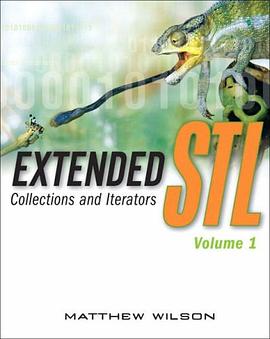
In Extended STL, renowned C++ expert Matthew Wilson shows how to go beyond the C++ standard and extend the Standard Template Library into the wider C++ world of APIs and non-standard collections, to write software that is more efficient, expressive, flexible, and robust.</p>
In Volume 1, Wilson’s innovative techniques help you master STL extension in two important areas: adapting technology-specific libraries and operating system APIs to STL-compliant collections, and defining sophisticated iterator adaptors with which the latent efficiency and expressive power of STL can be realized. Using real-world examples, Wilson illustrates several powerful concepts and techniques that enable you to extend STL in directions never envisioned by its creators, including collections, element reference categories, external iterator invalidation and inferred interface adaptation.</p>
Extended STL, Volume 1, will be an invaluable resource for every C++ programmer who is at least minimally familiar with the STL.</p>
Learn specific principles and techniques for STL extension
Learn more about the STL by looking inside the implementation of STL extensions
Learn general techniques for implementing wrappers over operating system APIs and technology-specific libraries
Learn how to write iterator adaptors and understand the reasons behind the restrictions on their implementations and use
Specific coverage includes</p>
Making the most of collections, and understanding how they differ from containers
Mastering element reference categories: defining them, detecting them, and using them to design STL extension collections and iterators
Working with external iterator invalidation, and understanding its surprising impact on the design of STL-compatible collections
Adapting real-world APIs ranging from file
system enumeration to scatter/gather I/O
Using standalone iterator types, from simple std::ostream_iterator extensions to sophisticated adaptors that filter and transform types or values
The accompanying CD-ROM contains an extensive collection of open-source libraries created by the author. Also included: several test projects, and three bonus chapters.</p>
作者简介
目录信息
读后感
用户评价
坦白讲,这本书的“Volume 1”这个副标题具有极大的误导性。如果这是第一卷,我非常好奇后续的卷册将要如何收尾那些未被触及的关键话题,比如并发编程原语的STL化封装,或者面向组件编程(COP)在STL基础上的应用框架。目前的这本厚书,给我的感觉是内容散乱,缺乏一个清晰的主线和目标受众定位。它既不够底层来满足系统程序员对实现细节的渴求,又不够高层来指导应用架构师进行有效设计。读完之后,我最大的感受是“什么都讲了一点,但什么都没讲深”。例如,它提到了`std::function`的实现原理,但一笔带过了关于其性能开销和ABI兼容性的业界权衡;它也展示了如何使用函数式编程的风格来链式调用算法,但对于如何避免闭包捕获带来的性能陷阱则只字未提。这本书更像是一个知识点的集合,而不是一个结构化的学习路径。它未能有效地将分散的STL组件知识点组织成一个可供开发者在实际项目中复用的强大工具箱。
说实话,这本书的排版简直是一场灾难,阅读体验极差。字体选择上似乎用了某种等宽字体,导致代码块和正文混杂在一起,段落之间的留白少得可怜,使得整页看起来密密麻麻,压迫感十足。我尝试着去理解其中关于“Traits”机制的讨论,那部分内容本应是讲解如何通过模板元编程实现编译期类型检查和特性提取的精妙之处。但作者的论述逻辑跳跃性极大,一会儿从一个泛型算法讲到函数对象,下一句又突然插入一长串晦涩的编译错误日志作为“示例”。这些示例代码片段往往缺失了完整的上下文,仿佛是随机截取的某个大型源码仓库中的片段。对于非科班出身,或者是在高压环境下需要快速查阅资料的工程师而言,这本书的阅读门槛高得令人望而却步。它更像是一份为资深研究人员准备的内部技术文档草稿,而不是一本面向广大软件工程师的教材或参考手册。我希望这本书能有一位更具教学天赋的编辑来梳理结构,用更清晰的图表和分步解析来引导读者,而不是直接把一堆复杂的概念像堆积木一样扔在你面前。
我对这本书的期望值,是它能为我们解决实际工程问题提供创新的视角,比如如何处理大规模并行计算中的数据同步问题,或者如何设计一套能无缝集成到现有项目中的自定义内存分配器框架。我对这方面的内容非常感兴趣,毕竟STL的扩展性正是C++灵活性的核心体现。然而,通读了关于“定制化分配器”的章节后,我感到一阵强烈的错愕。作者只是简单地重写了`new`和`delete`的包装器,并将其注册为兼容接口,这在二十年前或许算是“扩展”,但在今天,面对TCMalloc、jemalloc或者更现代的Hoard等成熟的并发安全分配器时,这种“自制”的解决方案显得如此幼稚且充满了潜在的内存泄露风险。书中完全没有提及任何关于线程安全、碎片整理或者性能剖析工具的应用。仿佛作者完全活在一个封闭的象牙塔中,对工业界主流的性能优化实践一无所知。这本书充其量只能算作一个八十年代末C++编程思想的记录,对于解决21世纪的软件难题,它提供的价值微乎其微。
这本书的翻译质量令人发指,简直像是机器直译后未加校对的产物。许多C++的核心术语,比如“Lvalue”、“Rvalue Reference”、“Move Semantics”等,被生硬地翻译成了拗口的中文词汇,使得原本抽象的概念更加难以理解。例如,“右值引用”被翻译成了“可移动值指向符”,读起来别扭不说,更丧失了原意中对资源所有权转移的强调。更糟糕的是,书中引用了大量国外社区的讨论片段作为论据,但这些引文大多是未经验证的、带有强烈个人偏见的观点,作者并未进行批判性吸收或整合。这种不负责任的引用方式,极大地污染了书本内容的客观性和权威性。我期待的是一本能够清晰、准确、与时俱进地介绍C++生态的优秀译著,而不是这样一本充斥着术语错误和二手观点的拼凑之作。每一次遇到这种翻译腔的句子,都不得不停下来,在脑中重新构建其英文原意,这极大地打断了我的学习节奏和心流状态。
这本书的封面设计充满了工业时代的厚重感,那种深沉的墨绿色和烫金的字体,让人一眼就能感受到它非同一般的专业性和深度。我拿到手的时候,光是翻开扉页,就能闻到一股新书特有的油墨和纸张混合的芬芳,让人心头一振。内容方面,我原本期待能找到一些关于容器适配器和智能指针的深入探讨,毕竟书名带了“Extended STL”的字样,总该有些超乎标准库之上的新颖工具或算法。然而,花了大价钱买回来的这份厚重读物,似乎更侧重于对C++标准库早期版本(比如SGI STL或者早期的GCC库实现)的追溯和代码级剖析。它花费了大量篇幅去讲解迭代器的底层工作原理,甚至不厌其烦地重现了`std::vector`的内存重分配机制,这种详尽程度固然体现了作者的钻研精神,但对于一个追求现代C++实践的开发者来说,这种“考古式”的讲解显得有些沉闷和不合时宜。我希望看到的是如何利用C++17或C++20的新特性来构建更高效、更安全的抽象层,而不是沉溺于那些早已被现代编译器优化得炉火纯青的基础实现细节。