
具体描述
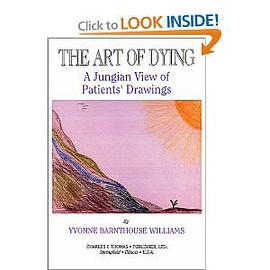
The Art of Dying: A Jungian View of Patients' Drawings By Yvonne Barnhouse Williams
A Review By Sheldon Shalley
Yvonne Williams in her book, "The Art of Dying: A Jungian View of Patients' Drawing", demonstrates once again that "most human thought and behavior is symbolic" (Jung). Williams shows how patients with cystic fibrosis (CF) express their thoughts and feelings about living and dying with CF by drawing pictures. She takes us on a journey of their inner experience as expressed symbolically in their drawings. In that process Williams illuminates the possible meanings of those drawings. With care and great respect for both the patient's individual journey with CF and for the role that the unconscious plays in that journey, Williams opens windows of insight into the possible meanings of patients' drawings at various stages of the illness. Ms Williams uses the patients' drawings, their comments about the drawings, and her own knowledge of symbols, mythology, Jungian and archetypal psychology to amplify and reflect back to her patients what is happening at the unconscious levels of experience in order to connect them more consciously to that process. At other times, the drawings become containers that Williams uses to hold the unconscious process as it develops allowing patients to come to the needed awareness on their own. In any case, Williams demonstrates that the unconscious knows far more about a patient's living and dying process than we might want to believe. She shows that patients know on some level when a relapse is on the horizon or when a time of improved health is ahead. Such information, Williams asserts, is revealed in the images in the patients' drawings. Williams gives examples of drawings that point to specific physiological developments such as a collapsed lung, gastric ulcer exacerbation, edema, sinusitis, pulmonary congestion, and the exact location of a returned cancer all prior to medical examination. Williams also shows how drawings reveal the psychological and emotional states of patients as well as the approach of death and how much time may be left. According to Williams, patients know deep within themselves if they will recover and when life will end. They have an unconscious awareness about their conditions and its prognosis. Their drawings reveal what the inner world of the unconscious knows--the secret knowledge of the repressed, the denied, the latent as well as where life is heading. This, according to Williams, is the value of having patients draw. The pictures are windows into the soul. For one brief moment--that moment when therapist and patient embrace the drawing--they share the secrets of this inner world.
"The Art of Dying" teaches us how the drawings of seriously ill patients can serve as mediators between life, death, and rebirth. At times they speak to the daily concerns of the patients' lives and their life tasks. At other times (and sometimes, at the same time) they speak to the preparation for death. Ultimately, the drawings seem to connect the dying patient to the life after death, a rebirth into a new life, and a new beginning.
Williams' exploration of the interaction between spirit and soul and the dominance of one over the other as one's partner in death is particularly enlightening and an important contribution to our evolving understanding of life and death and of how we die. Williams argues convincingly that what we need at death--soul or spirit--is archetypally determined based on the individual needs of the dying patient. To that end, says Williams, there are no "bad" or "good" deaths. Different archetypal energies contend to establish the attitude of one's consciousness and influences how one will adjust to death. In this process, Williams seems to suggest that we serve as midwives, receiving and bringing to birth from the patient what psyche produces. For one person the need may be to die as a warrior. Thus, the spirit archetype guides the way directing one to "fight the good fight." For another, the soul archetype leads. This person seems to "dance out of life" with confidence and peace. Williams warns against judging the attitude toward living and dying revealed in drawings and against interpreting a patient's drawings by projecting our own intuitions, values, desires, fears, and objectives onto the drawings. Rather, Williams would have us honor the drawings as authentic representations of the many possibilities of the patient's inner world.
Professional and layperson alike that are involved in the care of persons with a life-threatening illness will find this book both comforting and challenging. It comforts in that is asserts that there is a process beyond our conscious self or conscious ability that is working toward our healing and our wholeness. That healing and wholeness it turns out is spiritual, a connection to a greater Self, a Self that exists beyond the limitations of physical illness and death. It challenges us in that it forces us to examine our assumptions about life and death, about fantasy (drawing) and reality, and about the role the unconscious may play in helping us adjust to an illness or in releasing us to death and rebirth. In all of this, Ms Williams gently guides us through a wealth of valuable information for understanding what psyche produces when patients draw.
作者简介
目录信息
读后感
用户评价
这本书的封面设计简直是视觉上的盛宴,那种深邃的蓝与沉静的灰交织在一起,让人在第一时间就被深深吸引。我拿到手的时候,光是抚摸着那略带纹理的纸张,就能感受到出版方在细节上的用心。内页的排版也极为考究,字体大小和行间距拿捏得恰到好处,即便是长时间阅读,眼睛也不会感到疲惫。我特别喜欢它在章节过渡页采用的那种留白设计,简洁却充满力量,仿佛在引导读者进行一次深呼吸,准备迎接下一段思想的洗礼。装帧的厚度适中,拿在手里有一种实在的质感,而不是那种轻飘飘的廉价感。说实话,光是把这本书放在书架上,它本身就是一件艺术品,那种低调的、内敛的品质感,立刻提升了整个阅读环境的格调。我甚至会花上几分钟,仅仅是欣赏一下书脊上的烫金字体,在灯光下反射出的那种微弱而坚定的光芒。这本书的物理形态本身,就已经完成了一次关于“美学”的初步阐述,远超出了普通书籍的范畴,它更像是一件精心打磨的纪念物,让人想要珍藏。
这本书的深度远远超出了我最初的预期,它更像是一部引导人进行内在审视的工具书,而非一本提供标准答案的指南。它不会直接告诉你“应该怎么做”或“什么是对的”,相反,它提供了一系列的视角和框架,迫使你从不同的维度去解构自己固有的信念体系。我最受益匪浅的是其中关于“边界感”的探讨,作者细致地剖析了个人认知与外部现实之间的微妙张力,指出许多困境源于我们对这种张力处理的失衡。读完相关章节后,我清晰地意识到,很多日常的焦虑感,并非源于外部世界的混乱,而是源于内心对“确定性”的过度渴求。这本书没有提供廉价的安慰,但它提供了一种更具建设性的工具——清晰的洞察力,它让你学会如何与不确定性共存,甚至从中汲取力量。这种“赋能感”,是任何肤浅的励志口号都无法比拟的。
我最近读这本书的体验,简直像是在参加一场层层递进的智力探险。作者的叙事逻辑严密得令人称奇,他总能在看似不相关的两个概念之间,搭建起一座坚不可摧的思维桥梁。举例来说,他探讨“时间的不可逆性”时,引用了量子物理学的某个晦涩理论,但紧接着,他又能无缝地转接到古希腊哲学家对于“瞬间永恒”的辩证思考上。这种跨学科的融会贯通,展现了作者深厚的知识底蕴和极高的思辨能力。阅读过程中,我发现自己频繁地停下来,不是因为读不懂,而是因为思绪被抛向了一个新的、更广阔的领域,需要时间去消化和重构已有的认知框架。有些段落的句子结构极其复杂,充满了嵌套从句和精确的限定词,需要逐字逐句地去拆解,但一旦破解,那种豁然开朗的感觉,是单纯的休闲读物无法给予的。它要求读者投入全部的注意力,进行一场真正的脑力激荡,而不是被动地接收信息。
这本书的文字风格,可以用“清冽而克制”来形容,完全没有多余的煽情或华丽的辞藻堆砌。作者的笔触极其精准,如同外科手术刀一般,直指问题的核心。他似乎对每一个词语都经过了千锤百炼,用最少的笔墨描绘出最丰富的意境。我尤其欣赏他使用比喻的方式,那些比喻往往不是信手拈来,而是基于某种深刻的观察,带有哲学的重量。例如,他描述“接受”这个过程时,用到了“如同河床被季节性的洪流重塑,泥沙沉积后显露出新的稳定面貌”,这种画面感和思辨性并存的表达,让人印象深刻。这种克制的美学,使得当他偶尔流露出一些情感色彩时,其冲击力反而更强,仿佛冰山融化时那一滴水珠的重量。对于追求文学精炼度的读者来说,这本书的语言无疑是一场盛宴,每一个句子都值得被单独摘录下来,反复品味其内在的张力。
这本书的阅读体验是高度私密的、近乎冥想式的。由于其主题的深刻性,我发现自己无法将其与其他嘈杂的活动(比如听音乐或在公共交通上阅读)混杂。它需要一个安静、不受干扰的空间,让你能够完全沉浸在作者构建的思维场域中。我通常会在深夜,在台灯下,一杯清茶的陪伴下翻开它。每次阅读大约半小时,然后我会放下书本,让那些文字在我的意识中发酵、沉淀。这本书的“后劲”非常大,很多时候,我合上书本后,脑海中仍在回放其中的某个观点,那种感觉就像是脑海中被植入了一颗缓慢生长的种子。它不是那种读完就扔在一边的读物,而是那种需要被时间检验、随着人生成长而不断被重新理解的文本。它提供了一种更高级的陪伴,一种智力上的伙伴关系,让你在独处时,也能感到思想的丰盈与充实。