
具体描述
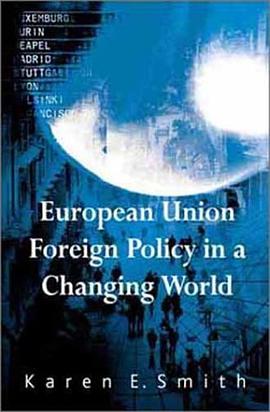
European Union Foreign Policy in a Changing World provides a clear introduction to the complexities of contemporary European Union foreign policy, and offers a fresh and distinctive perspective on the nature of the European Union's international identity.Opening with a discussion of the EU's evolution as an international actor, the book goes on to explore how and why the EU pursues five core foreign policy objectives, namely: the encouragement of regional cooperation; the advancement of human rights; the promotion of democracy and good governance; the prevention of violent conflicts; and the fight against international crime. By analysing the various means the EU has used to achieve these objectives, Karen Smith considers the extent to which the EU has pursued these goals consistently. She concludes with an assessment of the uniqueness of the EU as a global actor and the effectiveness of its foreign policy, by comparing its activities with those of other international actors pursuing similar objectives.This well-written and thoroughly researched textbook should appeal to undergraduate and postgraduate students of European politics, British politics, foreign policy studies, international relations and related disciplines<br/><br/> European Union Foreign Policy in a Changing World provides a clear introduction to the complexities of contemporary European Union foreign policy, and offers a fresh and distinctive perspective on the nature of the European Union's international identity.Opening with a discussion of the EU's evolution as an international actor, the book goes on to explore how and why the EU pursues five core foreign policy objectives, namely: the encouragement of regional cooperation; the advancement of human rights; the promotion of democracy and good governance; the prevention of violent conflicts; and the fight against international crime. By analysing the various means the EU has used to achieve these objectives, Karen Smith considers the extent to which the EU has pursued these goals consistently. She concludes with an assessment of the uniqueness of the EU as a global actor and the effectiveness of its foreign policy, by comparing its activities with those of other international actors pursuing similar objectives.This well-written and thoroughly researched textbook should appeal to undergraduate and postgraduate students of European politics, British politics, foreign policy studies, international relations and related disciplines
作者简介
目录信息
读后感
用户评价
阅读过程中,我最大的感受是这本书的“及时性”和“紧迫感”。它似乎紧跟世界脉搏,将最新的国际事件与宏大的理论分析无缝对接,使得书中的论点不至于沦为空泛的学院式讨论。比如,作者对全球供应链重塑背景下,欧盟如何平衡安全关切与贸易自由化诉求的探讨,提供了非常及时的见解。文字的叙述节奏把握得张弛有度,长句的逻辑推演与短句的有力总结穿插,使得阅读体验流畅而不拖沓。尽管涉及的议题复杂,但作者似乎总能找到一种将复杂性“翻译”成清晰逻辑链条的能力,让人在阅读时有一种不断“豁然开朗”的感觉。它不仅仅是在描述“正在发生什么”,更是在积极地引导读者思考“为什么会这样发生,以及我们应该如何应对”。这种对读者智力参与的激发,是判断一本学术著作价值的重要标准,而这本书无疑在这方面做得非常出色。
书中对当前全球地缘政治格局演变的分析,视角独特而深刻,它没有停留在对事件的简单罗列上,而是着力于挖掘驱动这些变化的深层结构性力量。作者对多极化趋势下,传统权力中心如何进行自我调适和战略再定位的剖析,极其到位。特别是在探讨新兴力量崛起对既有国际规范体系产生的冲击时,所引用的历史类比和理论模型,都显示出作者深厚的学术功底。我个人尤其欣赏作者在处理“欧洲利益”这一模糊概念时的审慎态度,他没有给出一个一成不变的定义,而是将其置于一个动态的、充满内在张力的框架内进行考察,这使得分析的结论更具现实指导意义。许多关于欧洲在气候变化、数字治理等新兴领域采取的共同立场,都被置于与主要国际伙伴博弈的背景下进行审视,为理解欧洲外交的复杂性提供了多维度的透视镜。这种不回避矛盾、直面复杂性的写作风格,让这本书的论证显得尤为有力且令人信服。
作者在文献综述和理论框架的构建上,展现出一种罕见的包容性和批判性并存的姿态。不同于一些仅囿于某一特定学派的著作,这本书似乎有意地在结构现实主义、建构主义乃至于后殖民理论之间架起桥梁,试图用更综合的视角来解释欧盟外交政策的生成逻辑。书中对于“规范性外交”这一概念的解构尤为精彩,它不仅描述了欧盟如何推广其价值观,更深入地探讨了这些价值观在不同文化和政治环境中遭遇的抵抗与适应,揭示了价值输出背后的权力运作机制。在方法论上,作者似乎更偏向于案例驱动的比较分析,通过对不同地区(例如印太、非洲、近东)战略部署的对比,清晰地勾勒出欧盟政策的一致性与碎片化并存的真实图景。这种对理论工具的灵活运用,使得即便是对国际关系理论不甚精通的读者,也能通过清晰的案例脉络把握住核心的理论洞察。
这本书的装帧设计和排版布局无疑是第一眼吸引读者的关键因素。封面采用了深邃的藏青色调,搭配着烫金的标题字体,散发出一种专业而又不失厚重的学术气息。纸张的质感也相当出色,触感细腻,即使是长时间阅读也不会感到刺眼或疲劳。内页的字体选择和行距处理得当,使得即便是面对复杂的理论阐述和密集的案例分析时,读者的视觉负担也大大减轻。尤其值得称赞的是,作者在关键概念的引入和重要论点的总结部分,采用了不同的字体或加粗处理,这种细微的视觉引导机制,极大地提高了阅读的效率和信息的抓取速度。装帧的坚固程度也显示出出版商对这本书长期使用的重视,它绝非那种翻阅几次就会松散的书籍,而是可以陪伴研究者度过数年学术旅程的可靠伙伴。整体而言,这本书在“看得见”的物理层面上,已经为读者构建了一个非常舒适且专业的阅读环境,为后续深入内容的研究打下了坚实的基础。这种对细节的关注,往往是衡量一本学术专著专业水准的一个重要指标。
这本书对于未来研究方向的启发意义,或许比它对既有现象的总结更为重要。在结论部分,作者并未给出一个“尘埃落定”式的答案,而是留下了大量开放性的议题和潜在的研究空白,这对于研究生和青年学者而言,无疑是极具价值的“研究地图”。特别是在探讨欧盟内部决策机制的僵局(Veto-players)如何影响其对外行动的连贯性时,作者提出了一些极具争议性但又发人深省的假设,这些假设无疑会引发学界新一轮的辩论和实证检验。这种以开放性结束研究的做法,体现了作者的学术自信和对领域前沿的责任感。它鼓励读者不将书中的论述视为终极真理,而是将其视为一个强有力的起点,去探索那些尚未被充分探讨的边缘地带和新兴挑战。对于任何希望在该领域做出实质性贡献的人来说,这本书提供的不仅仅是知识,更是一种激发原创性思考的思维范式。