
具体描述
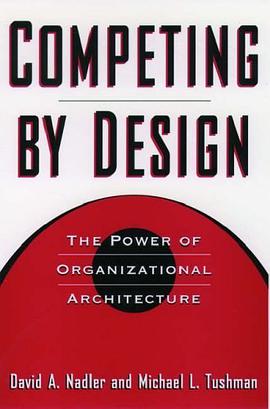
If the defining goal of modern-day business can be isolated to just one item, it would be the search for competitive advantage. And, as everyone in business knows, it's a lot harder than it used to be. On the one hand, competition is more intense than ever--technological innovation, consumer expectations, government deregulation, all combine to create more opportunities for new competitors to change the basic rules of the game. On the other hand, most of the old reliable sources of competitive advantage are drying up: the hallowed strategies employed by GM, IBM, and ATandT to maintain their seemingly unassailable positions of dominance in the 1960s and 70s are as obsolete as the calvary charge. So in this volatile, unstable environment, where can competitive advantage be found? As David Nadler and Michael Tushman show, the last remaining source of truly sustainable competitive advantage lies in "organizational capabilities": the unique ways each organization structures its work and motivates its people to achieve clearly articulated strategic objectives. For too long, too many managers have thought about "organization" merely in terms of rearranging the boxes and lines on an organizational chart--but as Competing by Design clearly illustrates, organizational strength is found far beyond one-dimensional diagrams. Managers must, argue Nadler and Tushman, understand the concepts and learn the skills involved in designing their organization to exploit their inherent strengths. All the reengineering, restructuring, and downsizing in the world will merely destabilize a company if the change doesn't address the fundamental patterns of performance--and if the change doesn't recognize the unique core competencies of that company. In this landmark volume, the authors draw upon specific cases to illustrate the design process in practice as they provide a set of powerful, yet simple tools, for using strategic organization design to gain competitive advantage. They present a design process, explore key decisions managers face, and list the guiding principles for incorporating the design function as a continuing and integral process in organizations that are looking to the future. In 1918, Henry Ford's Dearborn assembly plant was the model of the new assembly-line technology. Today, the assembly plant is an aging relic, but, incredibly, the organizational architecture it spawned lives on in steep hierarchies, centralized bureaucracies, and narrowly defined jobs. As companies are coming to realize they can't compete successfully in the 21st century with organizations based on 19th century ideas, Competing by Design shows clearly and persuasively why--and, most importantly how--to harness the power of organizational architecture to unleash the competitive strengths embedded in each organization.
作者简介
目录信息
读后感
用户评价
这本书的价值,在于它超越了工具书的范畴,上升到了一种哲学思辨的高度,但同时又紧密地植根于现实的商业斗争之中。它不像市面上很多畅销书那样,提供了一堆可以快速复制的“三步走”方案,而是要求读者进行深刻的自我反思和组织结构的反思。我印象最深的是关于“设计遗产”和“技术债务”的对比阐述,它提醒我们,每一次设计选择都在为未来构建某种程度上的限制或机遇。这本书的文字密度非常高,几乎没有一句是废话,需要非常专注地阅读,甚至建议搭配笔记本做大量的思考笔记。它教会我,真正的设计竞赛不是关于谁能最快地推出新功能,而是关于谁能最有效地将组织的所有资源、能力和战略意图,通过一个统一的、可执行的“设计愿景”整合起来,从而实现远超竞争对手的价值交付速度和质量。这本书让我对“设计”的理解,完成了一次从“手艺”到“艺术”再到“战略科学”的跃迁。
作为一个常年与工程师和市场人员打交道的项目经理,我发现《竞逐设计》这本书成为了我跨部门沟通的“通用语言”。它成功地架起了设计部门和商业部门之间那道无形的鸿沟。作者通过详细分析设计决策如何影响供应链的复杂性、财务模型的健康度,以及最终的市场占有率,让原本觉得“设计是成本中心”的同事们看到了设计作为“价值驱动力”的潜力。书中的语言风格非常直接、清晰,没有过多花哨的辞藻,更像是顶级咨询公司内部的培训材料,直击痛点,直指核心。尤其关于如何建立一个“自我修正的设计反馈回路”,这对于任何追求卓越运营的组织都是至关重要的。我甚至带着这本书去和我的供应商开会,讨论如何将设计意图无损地转化为制造流程,效果出奇的好,因为它提供了一个大家都认可的、基于逻辑的沟通基础。
《竞逐设计》这本书简直是本让人醍醐灌顶的宝典,尤其对于我这种在产品开发领域摸爬滚打多年的人来说,它提供了一种全新的、系统性的视角来审视“设计”这个概念。它没有落入那种浮于表面的、只谈美学或者用户体验的俗套,而是深入到了战略层面。我特别欣赏作者对于“设计即决策”这一核心观点的阐述,那种将设计流程与商业目标、资源限制、甚至组织文化紧密编织在一起的论述,让我深刻反思了过去工作中很多“拍脑袋”的决定背后的逻辑漏洞。书中通过大量的案例分析,细致剖析了那些看似成功的设计是如何一步步通过对市场信号的敏锐捕捉、对技术边界的精准拿捏,最终转化为竞争优势的。特别是关于“设计边界的设定”那一部分,它清晰地指出了如何在有限的资源内,找到那个“刚刚好”的创新点,既能满足用户需求,又不至于过度工程化,这种务实与前瞻性的平衡,非常具有操作指导意义。我感觉自己过去一直是在“做设计”,而读完这本书,我开始学会“用设计来赢”。
坦白说,我起初是被书名吸引的,以为会是一本关于工业设计或者UI/UX的纯技术手册,结果完全出乎意料,它更像是一本关于组织智慧和跨界协作的厚重专著。这本书最让我震撼的是其对“动态能力”的强调,它不是教你如何设计出一款完美的产品然后高枕无忧,而是告诉你,在变化如此之快的市场环境下,企业自身的“设计思考体系”比任何一款具体产品都要重要得多。书中的论述逻辑极其严谨,每一步推理都有坚实的理论基础支撑,但行文又不失生动,引用了许多跨行业的鲜活例子,比如从 F1 赛车队的快速迭代到医疗设备制造商的长期战略布局,这使得即便是对我来说略显晦涩的战略管理概念也变得非常易于理解。它让我意识到,设计不再是一个部门的职责,而是一种渗透到企业毛细血管中的思维方式。读完后,我甚至开始重新审视我自己的工作流程,思考如何能让团队更有效地在不确定性中保持敏捷和连贯性。
这本书的视角非常“冷峻”和“宏大”,它毫不留情地揭示了许多行业内“黑箱操作”的真相。作者似乎站在一个俯瞰全局的战略制高点,将设计过程比作一场高风险的棋局。我最喜欢它对“风险对冲”的设计策略的讨论。在很多企业倾向于追求“颠覆式创新”的今天,这本书却沉稳地教导我们如何通过“渐进式优化”和“平台化设计”来构建难以被模仿的壁垒。它提供的工具和框架,比如对“设计债务”的量化分析,让我能够更清晰地向高层汇报我们当前的设计状态以及未来投入的必要性,而不是仅仅停留在“我们认为这个界面需要优化”这种主观判断上。虽然有些章节涉及到了复杂的系统动力学,初读时需要放慢速度,甚至需要反复咀嚼,但一旦理解了其中的精髓,你就会明白,这种深度思考才是构建持久竞争力的基石。