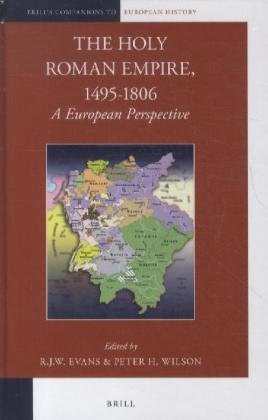

具体描述
In the early modern period the Holy Roman Empire, or Reich, was one of the oldest and largest European states. Its importance was magnified by its location at the heart of the continent, by the extensive international connections of its leading families, and by the involvement of foreign rulers in its governance. This book breaks new ground in its collective exploration of aspects of cross-border and transnational interaction, and of political and diplomatic, social and cultural relations. There are essays on important turning-points, especially 1648 and 1806; on the patterns of rulership of the emperors themselves; on areas which lay on the margin of the Reich; on neighbouring countries which interacted with the Empire; and on visual and material culture.
作者简介
Contributors are Wolfgang Burgdorf, Olivier Chaline, Heinz Duchhardt, Jeroen Duindam, Robert Evans, Sven Externbrink, Robert Frost, Lothar Höbelt, Thomas DaCosta Kaufmann, Petr Mat'a, Nicolette Mout, Thomas Munck, Géza Pálffy, Jaroslav Pánek, Adam Perłakowski, Friedrich Polleroß, Blythe Alice Raviola. Peter Schröder, Kim Siebenhüner, Peter H. Wilson and Thomas Winkelbauer.
目录信息
Contents......Page 6
List of Illustrations and Maps......Page 10
List of Contributors......Page 12
Peter H. Wilson and R.J.W. Evans: Introduction......Page 16
Section I: Turning Points......Page 32
A Peace to End All Religious Wars......Page 34
The Westphalian System and Europe......Page 41
Peter Schröder: The Holy Roman Empire as model for Saint-Pierre’s Projet pour rendre la paix perpétuelle en Europe......Page 50
Wolfgang Burgdorf: ‘Once We Were Trojans!’ Contemporary Reactions to the Dissolution of the Holy Roman Empire of the German Nation......Page 66
Section II: Habsburg Governance......Page 92
Olivier Chaline: Inside the Empire and for the House of Austria: The Buquoy Family from the Spanish Low Countries to Bohemia......Page 94
I. Introduction......Page 106
II. The Court: Towards an Open Definition......Page 110
III. The Imperial Court: Erzämter and Erbämter......Page 114
IV. Habsburg Hofämter versus the Imperial Erbämter: An Unequal Battle?......Page 123
V. Concluding Remarks......Page 132
Jaroslav Pánek: Bohemia and the Empire: Acceptance and Rejection......Page 136
Petr Maťa: Bohemia, Silesia and the Empire: Negotiating Princely Dignity on the Eastern Periphery......Page 158
Thomas Winkelbauer: Separation and Symbiosis: The Habsburg Monarchy and the Empire in the Seventeenth Century......Page 182
Section III: Cores and Peripheries......Page 200
Sven Externbrink: State-Building within the Empire: The Cases of Brandenburg-Prussia and Savoy-Sardinia......Page 202
Nicolette Mout: Core and Periphery: The Netherlands and the Empire from the Late Fifteenth to the Early Seventeenth Century......Page 218
1. From the Padan Network to Reichsitalien......Page 232
2. Piedmont, Liguria and the Imperial Fiefs......Page 235
2.1. Desana......Page 237
2.2. The fiefs of Zuccarello and Langhe......Page 239
2.3. Monferrato’s Imperial fiefs and the problem of the vicariate......Page 242
3. Open Questions and Possible Comparisons......Page 246
Section IV: Neighbours......Page 252
Robert Frost: The Impact of War: The Holy Roman Empire and Poland-Lithuania, c. 1600–1806......Page 254
Géza Pálffy: An ‘Old Empire’ on the Periphery of the Old Empire: The Kingdom of Hungary and the Holy Roman Empire in the Sixteenth and Seventeenth Centuries......Page 274
1. An ‘Old Empire’ Outside the Old Empire but Inside the Habsburg Monarchy......Page 275
2. Defending Central Europe against the Ottomans with the Help of the Imperial Turkish Tax......Page 279
3. Economic Relations between Hungary and the Holy Roman Empire......Page 285
4. Culture, Law, the Nobility, and Titles......Page 288
5. The Empire in Hungary—Hungary in the Habsburg Monarchy......Page 291
Adam Perłakowski: The Polish-Lithuanian Commonwealth and Electoral Saxony in the Early Eighteenth Century: Crisis and Cooperation......Page 296
Thomas Munck: The Northern Periphery: German Cultural Influences on the Danish-Norwegian Kingdom during the Enlightenment......Page 308
The Danish Language and the Reaction to Struensee......Page 311
The ‘German Feud’ (Tyskerfejden) of 1789......Page 317
Comparing Cultural Influences on Denmark and Sweden in the Late Enlightenment......Page 322
Conclusions......Page 326
Section V: Imperial Culture and Identity......Page 328
Thomas DaCosta Kaufmann: Centres or Periphery? Art and Architecture in the Empire......Page 330
Kim Siebenhüner: Where Did the Jewels of the German Imperial Princes Come From? Aspects of Material Cultural in the Empire......Page 348
1. The Circulation of Jewels in Europe......Page 352
2. The Fuggers as Jewel Dealers......Page 354
3. The Origins of the Precious Stones......Page 359
Friedrich Polleross: Portraiture at the Imperial Court in the First Half of the 17th Century......Page 364
Rudolf II and the Foundations of Baroque representation......Page 365
Matthias and Ferdinand II: Back to the Roots......Page 370
Ferdinand III and Leopold Wilhelm: Modernity versus Severity......Page 374
Heinz Duchhardt: Epilogue: International System and Imperial System in the ‘Short’ Eighteenth Century: Two Worlds?......Page 382
II. Overviews and General Interpretations of the Empire......Page 388
III. Specialist Studies......Page 389
Index......Page 400
Illustration section......Page 418
· · · · · · (收起)
读后感
本书主要为研究神圣罗马帝国提供了一个新的思路:从帝国本身的视角来研究帝国。而不同于以往的从普鲁士或者奥地利甚至其它较有实力的大邦为中心的民族主义视角研究。 从目标上看,本书力图反驳的是“十六世纪以来,帝国不断衰落”这一观念,这一观念被伏尔泰加以总结,并广为流...
最近,北京大學出版社翻譯了一系列名為“想像歐洲叢書”的作品,挑選了許多具有各種不同特色的歷史事件,或國家,或時代為主題,並邀請了其專業學者做一種“入門式、導論”的介紹,目標是能夠讓更多學子能夠輕鬆的進入研究的領域。目前已經出了八冊,尚有十餘本待出中。 這一...
最近,北京大學出版社翻譯了一系列名為“想像歐洲叢書”的作品,挑選了許多具有各種不同特色的歷史事件,或國家,或時代為主題,並邀請了其專業學者做一種“入門式、導論”的介紹,目標是能夠讓更多學子能夠輕鬆的進入研究的領域。目前已經出了八冊,尚有十餘本待出中。 這一...
我不明白为什么认为神罗分裂缺乏活力的理论要被放在“普鲁士中心论”的名下:( 难道不应该放在什么“德意志(民族)统一论”“帝国主权(强权)论”这种东西下吗:( 说实在的这种论调明显是站在德二的视角看问题啊哪里是我普中心哦(而且民族主义色彩十分浓重了好伐)(真的...
1、神圣罗马帝国的皇帝是选举产生的,这是和东方君主最大的不同之处。也就是说,在欧洲,帝国皇帝不是血统上的,而是政治和宗教意义上的。这样的差异,一方面是因为在罗马帝国时代,皇帝就是有选举的传统,虽然很多时候,这样的选举仅仅是形式上的。但是至少在制度上,在程序上...
用户评价
这本书最让我印象深刻的是它对于个体命运在宏大历史进程中交织的描绘。我仿佛看到了那些身处不同阶层、不同地域的人们,如何在神圣罗马帝国的框架下生存、奋斗、甚至挣扎。从那些雄心勃勃的选帝侯,到恪守传统的帝国骑士,再到默默无闻的农民,每个人都被赋予了生命和色彩。作者并没有将历史人物简单地脸谱化,而是深入挖掘了他们的动机、情感和思想,使得这些历史的长河中的人物不再是冰冷的符号,而是活生生的个体。
在阅读这本书的过程中,我常常会停下来,去查阅一些作者提及的文献或人物。这种“延展式阅读”的体验非常愉快,它让我不仅仅是被动地接受信息,而是主动地去探索和学习,也进一步加深了我对书本内容的理解。
对于我这样的普通读者来说,最难得的是,这本书并没有让我感到疏离。尽管它探讨的是一个跨越几个世纪的政治体系,但作者始终保持着一种平易近人的姿态,用清晰易懂的语言解释那些复杂的概念。我能够感受到作者对这段历史的热情,这种热情也能够有效地传递给我,让我沉浸其中,乐此不疲。
这本书的叙事风格也十分独特,既有史学研究的严谨,又不失文学作品的感染力。作者在描述重大历史事件时,能够抓住核心的矛盾和关键的转折点,将复杂的局势梳理得井井有条。同时,他也善于运用生动的语言和形象的比喻,使得那些看似枯燥的历史细节变得鲜活有趣。我尤其喜欢作者在一些章节结尾处所做的总结性评论,它们往往能够引发我更深层次的思考。
总的来说,这本书是一次极具启发性的阅读体验。它不仅让我对神圣罗马帝国有了全新的认识,更重要的是,它激发了我对欧洲历史更广泛的兴趣。我会毫不犹豫地将这本书推荐给任何对这段历史感兴趣的朋友。
我曾以为,历史就是一系列事件的简单堆砌,但这本书彻底改变了我的看法。它让我认识到,历史的进程是如此的复杂和多维,每一个事件、每一个人物,都可能牵扯到无数的因素。作者通过对神圣罗马帝国近三个世纪的深入研究,为我们呈现了一幅波澜壮阔的历史画卷。
这本书的封面设计就足够吸引我了,那种古老而厚重的质感,仿佛能将我带回那个遥远的时代。尽管我对神圣罗马帝国这个概念并不陌生,也曾阅读过一些相关的历史资料,但当我真正翻开《神圣罗马帝国,1495-1806》时,才意识到自己之前的理解是多么的片面和浅显。作者以极其细腻的笔触,勾勒出这个庞大而复杂的政治实体在三个多世纪里的演变轨迹。我尤其着迷于作者对于帝国体制内部权力关系的深入剖析,无论是皇帝与诸侯之间的博弈,还是帝国会议上那些冗长而又充满智慧的辩论,都让我身临其境。
我一直对欧洲的政治思想史很感兴趣,而这本书恰好满足了我的这一需求。它详细阐述了神圣罗马帝国在欧洲政治格局中的独特地位,以及它对后世欧洲国家形成的深远影响。作者对于“帝国”这一概念的演变和内涵的探讨,也让我对现代民族国家的形成有了更深刻的理解。
在阅读过程中,我常常会惊叹于作者扎实的史料功底和严谨的逻辑分析。每一段论述都建立在坚实的史实基础之上,并且能够逻辑清晰地推导出结论。这不仅仅是一部历史著作,更像是一场思维的盛宴。我特别欣赏作者对于不同学派观点的辨析,他并没有回避学术界存在的争议,而是主动将其呈现出来,并给出自己的解读,这让我受益匪浅,也拓宽了我对这段历史的认知维度。
这本书提供的视角非常宝贵,它让我看到了一个完全不同于我们今天所熟悉的欧洲。在这个被无数小邦国、自由城市和骑士领地分割的世界里,神圣罗马帝国扮演着一种特殊的“保护伞”和“协调者”的角色,虽然它并非无所不能,但其存在的意义和影响却不容忽视。