
具体描述
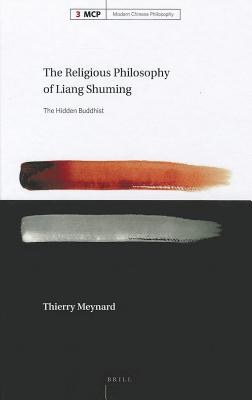
Liang Shuming (1895-1988) is one of the most important Chinese philosophers in twentieth century China. Generally considered to be a Confucian, and even the last Confucian, the author argues that he was in fact a Buddhist. Liang s thoughts are analysed within the background of the intellectual debates on religion in republican China. He reshaped the Western concept of religion from the standpoint of Yog c ra Buddhism. Yet, he advocated for the present time Confucianism as the ethical religion that would lead ultimately to the Buddhist liberation. Examining Liang s religious belief sheds new light on his fascinating life, particularly his involvement in the Rural Reconstruction movement of the nineteen-thirties. It also explains why Liang was the only intellectual who dared to publically oppose Mao in the nineteen-sixties and seventies."
作者简介
Thierry Meynard, Ph. D. (2003) in Philosophy, University of Peking, is Professor of Philosophy at Sun Yat-sen University, Guangzhou, China.
目录信息
Guy Alitto
Preface xi
Acknowledgments xv
Chapter One The Shaping of the Concept of Religion in China 1
Chapter Two A Philosophy and Typology of Religion 21
Chapter Three Christianity as a Social Religion 47
Chapter Four Buddhism as the True Religion 61
Chapter Five Buddhist Practice and Yogacara Epistemology 81
Chapter Six Buddhist Ontology 105
Chapter Seven Opposition to Humanistic Buddhism 127
Chapter Eight Confucian Morality as a Substitute for Religion 147
Chapter Nine Religious Aspects of Liang's Public and Private Lives 165
Conclusion Broadening the Concept of Religion for Today 201
Bibliography 215
Index 223
· · · · · · (收起)