
具体描述
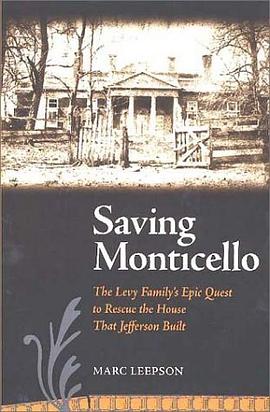
When Thomas Jefferson died on the Fourth of July 1826 -- the nation's fiftieth birthday -- he was more than $100,000 in debt. Forced to sell thousands of acres of his lands and nearly all of his furniture and artwork, in 1831 his heirs bid a final goodbye to Monticello itself. The house their illustrious patriarch had lovingly designed in the Blue Ridge Mountains of Virginia, his beloved "essay in architecture," was sold to the highest bidder.
Saving Monticello offers the first complete post-Jefferson history of this American icon and reveals the amazing story of how one Jewish family saved the house that became a family home to them for 89 years -- longer than it ever was to the Jeffersons. With a dramatic narrative sweep across generations, Marc Leepson vividly recounts the turbulent saga of this fabled estate. Twice the house came to the brink of ruin, and twice it was saved, by two different generations of the Levy family. United by a fierce love of country, they venerated the Founding Fathers for establishing a religiously tolerant and democratic nation where their family had thrived since the founding of the Georgia colony in 1733, largely free of the persecutions and prejudices of the Old World.
Monticello's first savior was the mercurial U.S. Navy Commodore Uriah Phillips Levy, a colorful and controversial sailor, celebrated for his successful campaign to ban flogging in the Navy and excoriated for his stubborn willfulness. Prompted in 1833 by the Marquis de Lafayette's inquiry about "the most beautiful house in America," Levy discovered that Jefferson's mansion had fallen into a miserable state of decay. Acquiring the ruined estate and committing his considerable resources to its renewal, he began what became a tumultuous nine-decade relationship between his family and Jefferson's home.
After passing from Levy control at the time of the commodore's death, Monticello fell once more into hard times, cattle being housed on its first floor and grain in its once elegant upper rooms. Again, remarkably, a member of the Levy family came to the rescue. Uriah's nephew, the aptly named Jefferson Monroe Levy, a three-term New York congressman and wealthy real estate and stock speculator, gained possession in 1879. After Jefferson Levy poured hundreds of thousands of dollars into its repair and upkeep, his chief reward was to face a vicious national campaign, with anti-Semitic overtones, to expropriate the house and turn it over to the government. Only after the campaign had failed, with Levy declaring that he would sell Monticello only when the White House itself was offered for sale, did Levy relinquish it to the Thomas Jefferson Foundation in 1923.
Rich with memorable, larger-than-life characters, beginning with Thomas Jefferson himself, the story is cast with such figures as James Turner Barclay, a messianic visionary who owned the house from 1831 to 1834; the fiery Uriah Levy, he of the six courts-martial and teenage wife; the colorful Confederate Colonel Benjamin Franklin Ficklin, who controlled Monticello during the Civil War; and the eccentric, high-living, deal-making egoist Jefferson Monroe Levy. Pulling back the veil of history to reveal a story we thought we knew, Saving Monticello establishes this most American of houses as more truly reflective of the American experience than has ever been fully appreciated.
作者简介
目录信息
读后感
用户评价
这本关于美国历史的著作,深入剖析了早期殖民地时期社会结构的演变,尤其侧重于精英阶层如何通过对土地和劳动力的掌控来巩固其政治权力。作者以其深厚的学术功底,构建了一个宏大而精微的叙事框架,使得即便是对这段历史不甚熟悉的读者也能清晰地把握其复杂脉络。书中对法律条文和私人信件的细致解读,揭示了那个时代思想观念的冲突与融合,比如关于个人自由与集体责任之间的张力,是如何在实践中被不断地协商和重塑的。尤其令人印象深刻的是,它并没有将历史人物描绘成刻板的符号,而是展现了他们在特定历史情境下的挣扎与权衡,那些充满矛盾的决策背后,有着令人信服的人性根源。读完后,我对那个“黄金时代”的表象下涌动的暗流有了更深刻的理解,它不再是教科书上扁平化的陈述,而是一个充满活力的、仍在呼吸的过去。那些关于财富积累模式的分析,对于理解当代社会结构中的不平等现象,也提供了宝贵的历史视角和参照系。
坦白说,这本书的厚度和内容的密度一度让我感到有些畏惧,但一旦真正沉浸其中,那种充实感是无与伦比的。它不仅仅是在讲述“发生了什么”,更在追问“为什么会这样”,并试图提供一个多层次的解答。书中对经济政策与文化保守主义之间复杂关联的探讨,尤为精辟。作者清晰地展示了,在特定的历史时期,看似无关的经济激励如何悄无声息地塑造了人们的道德观和世界观,这种由下至上的影响路径,比单纯分析领袖宣言要深刻得多。我特别喜欢作者在关键论点后留下的“开放性问题”,它们没有提供一个终极答案,而是巧妙地引导读者进入更深层次的思考,鼓励我们带着历史的眼光去审视当下的困境。这本书的价值不仅在于其知识的传递,更在于其思维方式的训练,它像一把精密的钥匙,打开了我们理解复杂社会系统的能力。
这部作品给我带来的最大感受是其持久的共鸣感,尽管讲述的是遥远的过去,但其中蕴含的关于理想与现实的冲突,却与我们身处的时代有着惊人的相似性。书中对于建立新秩序的宏大愿景,以及在实践中不可避免的妥协、背叛与幻灭的描绘,是如此真实且令人心痛。作者极其擅长捕捉“崇高”与“庸俗”并存的瞬间——那些试图建立完美社群的努力,如何在日常的琐碎、人性的弱点和外部的压力面前逐渐崩塌。它没有提供廉价的安慰或简单的道德审判,而是以一种近乎悲悯的笔触,记录了人类在追求更美好生活过程中的必然代价。读完之后,我没有感到胜利的狂喜,反而有一种沉甸甸的沉思,它迫使我反思,我们今天所珍视的那些“进步”,是以何种我们尚未完全理解的方式,从前人的血肉与智慧中继承而来的,以及我们是否正在重复着那些古老的错误。
这本书在方法论上的创新性是其最引人注目的特点之一。它大胆地挑战了传统上以男性政治精英为中心的史学范式,转而深入挖掘了那些长期被主流叙事所忽略的群体——特别是那些在经济边缘徘徊的工匠、少数族裔群体以及被边缘化的女性知识分子。作者运用了社会学、人类学乃至文化研究的交叉理论工具,对现有的二手资料进行了颠覆性的重构。举例来说,书中对某一时期公共集会中非语言交流模式的分析,就为我们理解当时的社会权力动态提供了全新的解读维度。这种跨学科的视野,使得论证不仅坚实有力,更充满了理论上的启发性。我特别欣赏它在处理史料时的那种批判性姿态——不盲目相信权威记录,而是像侦探一样,从字里行间去寻找被刻意隐藏或遗忘的声音。对于那些厌倦了传统学院派历史写作的读者来说,这本书无疑是一股清新的空气,它证明了历史研究依然可以充满活力和颠覆性。
我对这本书的文笔赞叹不已,简直是一场文字的盛宴。作者似乎是一位天生的故事讲述者,他将枯燥的政治辩论和冗长的档案记录,转化成了扣人心弦的戏剧场景。叙事的节奏把握得恰到好处,时而如涓涓细流般娓娓道来,细致描摹了日常生活的琐碎与庄严;时而又如暴风骤雨般猛烈,将关键的历史转折点推向高潮,让人屏息凝神,仿佛亲历了那些决定国家命运的瞬间。特别是他对环境描写和人物心理刻画的精妙运用,使得阅读体验极其沉浸。比如,书中对某一特定季节里,乡村景象与城市政治气氛的对比,那种氛围的渲染力极强,让人能真切地感受到人物内心的躁动与不安。这本书的结构也颇具匠心,它并非完全线性叙事,而是巧妙地穿插了不同视角的片段,像织锦一样,将不同阶层和地理区域的故事线索编织在一起,最终形成了一幅完整而立体的历史画卷。这绝对是一部需要慢慢品味的佳作,每一次重读都会发现新的韵味。