
具体描述
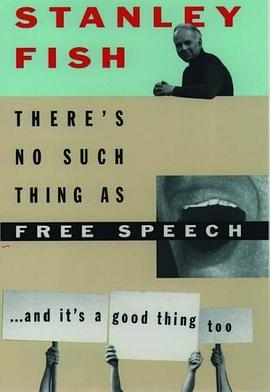
In an era when much of what passes for debate is merely moral posturing--traditional family values versus the cultural elite, free speech versus censorship--or reflexive name-calling--the terms "liberal" and "politically correct," are used with as much dismissive scorn by the right as "reactionary" and "fascist" are by the left--Stanley Fish would seem an unlikely lightning rod for controversy. A renowned scholar of Milton, head of the English Department of Duke University, Fish has emerged as a brilliantly original critic of the culture at large, praised and pilloried as a vigorous debunker of the pieties of both the left and right. His mission is not to win the cultural wars that preoccupy the nation's attention, but rather to redefine the terms of battle. In There's No Such Thing as Free Speech, Fish takes aim at the ideological gridlock paralyzing academic and political exchange in the nineties. In his witty, accessible dissections of the swirling controversies over multiculturalism, affirmative action, canon revision, hate speech, and legal reform, he neatly eviscerates both the conservatives' claim to possession of timeless, transcendent values (the timeless transcendence of which they themselves have conveniently identified), and the intellectual left's icons of equality, tolerance, and non-discrimination. He argues that while conservative ideologues and liberal stalwarts might disagree vehemently on what is essential to a culture, or to a curriculum, both mistakenly believe that what is essential can be identified apart from the accidental circumstances (of time and history) to which the essential is ritually opposed. In the book's first section, which includes the five essays written for Fish's celebrated debates with Dinesh D'Souza (the author and former Reagan White House policy analyst), Fish turns his attention to the neoconservative backlash. In his introduction, Fish writes, "Terms that come to us wearing the label 'apolitical'--'common values', 'fairness', 'merit', 'color blind', 'free speech', 'reason'--are in fact the ideologically charged constructions of a decidedly political agenda. I make the point not in order to level an accusation, but to remove the sting of accusation from the world 'politics' and redefine it as a synonym for what everyone inevitably does." Fish maintains that the debate over political correctness is an artificial one, because it is simply not possible for any party or individual to occupy a position above or beyond politics. Regarding the controversy over the revision of the college curriculum, Fish argues that the point is not to try to insist that inclusion of ethnic and gender studies is not a political decision, but "to point out that any alternative curriculum--say a diet of exclusively Western or European texts--would be no less politically invested." In Part Two, Fish follows the implications of his arguments to a surprising rejection of the optimistic claims of the intellectual left that awareness of the historical roots of our beliefs and biases can allow us, as individuals or as a society, to escape or transcend them. Specifically, he turns to the movement for reform of legal studies, and insists that a dream of a legal culture in which no one's values are slighted or declared peripheral can no more be realized than the dream of a concept of fairness that answers to everyone's notions of equality and jsutice, or a yardstick of merit that is true to everyone's notions of worth and substance. Similarly, he argues that attempts to politicize the study of literature are ultimately misguided, because recharacterizations of literary works have absolutely no impact on the mainstream of political life. He concludes his critique of the academy with "The Unbearable Ugliness of Volvos," an extraordinary look at some of the more puzzing, if not out-and-out masochistic, characteristics of a life in academia. Penetrating, fearless, and brilliantly argued, There's No Such Thing as Free Speech captures the essential Fish. It is must reading for anyone who cares about the outcome of America's cultural wars.
作者简介
目录信息
读后感
用户评价
这本书的深度和广度都令我印象深刻。作者涉猎的领域非常广泛,从历史、哲学到政治、法律,都有涉及。然而,他/她并没有因此显得杂乱无章,而是将这些看似独立的领域巧妙地融为一体,形成了一个有机的整体。这种跨学科的视野,让我对很多问题有了更深刻的理解。我发现,很多社会问题并非孤立存在,而是相互关联,相互影响。只有从更宏观的视角去看待它们,才能找到根本的解决方案。
这本书的语言风格非常独特,既有学术的严谨,又不失文学的感染力。作者在遣词造句上十分讲究,每一个词语都恰如其分,精准地表达了他/她的意思。有时,他/她会使用一些富有诗意的表达,让冰冷的理论变得温暖起来;有时,又会用犀利的语言,直击问题的核心。这种张弛有度的语言运用,让阅读过程充满了乐趣。我尤其喜欢他/她某些段落的铺陈,层层递进,直至最后爆发,那种力量感让我心潮澎湃。即使是枯燥的法律条文,在他/她的笔下也仿佛活了过来,充满了生命力。这种对语言的掌控力,让这本书的阅读体验更上一层楼。
这本书的价值在于它能够引发深刻的思考。它不是一本读完就丢的书,而是一本值得反复品读、时常翻阅的书。每次重读,我都会有新的发现和感悟。随着时间的推移,我的人生阅历也在增长,对书中的内容也会有更深的体会。我喜欢这种“常读常新”的感觉,它让这本书的价值得以延续。我甚至会向身边的朋友推荐这本书,并与他们分享我的阅读心得,一同探讨书中的思想。
我非常欣赏作者在处理争议性话题时所展现出的平衡性和客观性。他/她并没有回避敏感的问题,而是直面它们,并从多个角度进行分析,力求给读者一个全面的视角。即使在表达自己的鲜明立场时,也能够尊重不同的观点,并尝试理解其合理性。这种成熟的论证方式,让我更加信服他/她的观点。我发现自己在与人讨论问题时,也开始尝试学习这种方法,努力做到既有自己的主见,又不失对他人的尊重。
这本书的结构安排也十分精巧。作者似乎为读者精心设计了一条阅读路径,从一个相对容易理解的概念出发,逐步深入到更复杂的核心论题。每一个章节都像是一个精心搭建的积木,为后续内容的展开奠定了基础。我喜欢这种循序渐进的阅读体验,它避免了信息过载带来的焦虑感,让我在轻松愉悦的氛围中,逐渐掌握作者想要传达的思想。有时,我甚至会期待下一章会揭示怎样的观点,这种期待感让阅读本身变得更加有趣。
初读这本书,我最先感受到的是作者那种严谨的学术态度和深厚的知识储备。他/她引用了大量的历史事件、法律案例以及哲学思想,将复杂的概念梳理得井井有条,逻辑清晰。阅读过程中,我常常会停下来,反复咀嚼某些段落,试图理解其背后的深层含义。有时,我会拿出纸笔,记下一些关键的论点或者引用的出处,以便日后查阅。作者在论证过程中展现出的洞察力令人惊叹,他/她能够从看似无关的现象中挖掘出内在的联系,并用极具说服力的方式呈现出来。我特别欣赏他/她那种不畏权威、敢于挑战既定观点的勇气。很多时候,我们习惯于接受被广泛传播的“真理”,而这本书却鼓励我们质疑,鼓励我们从不同的角度去审视事物。这种批判性思维的训练,对我而言是极其宝贵的。
这本书的封面设计就足够吸引人,那种略带复古的印刷字体,加上大胆的留白,瞬间就勾起了我的好奇心。翻开扉页,一股淡淡的纸墨香扑鼻而来,这是一种久违的阅读体验,在如今电子书横行的时代,实体书的质感尤为珍贵。我喜欢那种指尖摩挲书页的触感,以及翻动书页时发出的细微沙沙声。这本书的排版也很舒适,字体大小适中,行间距合理,长时间阅读也不会感到眼睛疲劳。每一个章节的划分都恰到好处,既有连贯性,又不会让人觉得冗长。我常常会在通勤的路上,或者睡前的一段时光,沉浸在这本书的世界里。它不仅仅是一本书,更像是我在喧嚣生活中找到的一处宁静角落,让我可以暂时放下外界的纷扰,专注于作者想要传递的思想。即使在最疲惫的时候,翻开它,总能重新获得一些力量和启迪。我喜欢它所营造出的那种沉浸感,仿佛作者就在我耳边低语,娓娓道来。这种体验是数字化的信息无法比拟的。
这本书给我带来的不仅仅是知识的增长,更是思维方式的改变。作者在探讨某些话题时,所使用的比喻和类比非常生动形象,即使是比较晦涩的理论,也能被他/她解释得通俗易懂。我喜欢他/她那种循循善诱的写作风格,不会强迫读者接受某个观点,而是通过层层递进的论证,引导读者自己得出结论。在阅读过程中,我常常会发现自己原有的认知被颠覆,一些根深蒂固的观念开始动摇。这种“思想的阵痛”虽然有时令人不适,但却是成长的必经之路。我发现自己开始更加关注社会现象背后的深层原因,不再轻易被表面的信息所迷惑。这种转变,是这本书最让我受益的地方。
我不得不提的是,这本书让我对很多习以为常的社会现象产生了全新的认识。作者在分析问题时,不仅仅停留在表面,而是深入挖掘其历史根源和社会背景。他/她提出的观点,往往能引起我的共鸣,让我觉得自己并非孤身一人在思考这些问题。在阅读过程中,我常常会联想到自己生活中的一些经历,并尝试用书中的理论来解释。这种学以致用的过程,让我觉得非常有成就感。这本书就像一位循循善诱的良师益友,在我迷茫的时候,为我指点迷津;在我困惑的时候,为我解开疑团。
最后,我想说,这本书是一次令人难忘的阅读旅程。它挑战了我的固有认知,拓宽了我的视野,也丰富了我的思想。我感谢作者为我们带来如此有深度、有价值的作品。这本书不仅仅是一本读物,更像是一种思想的启蒙,一种精神的洗礼。它让我更加清晰地认识到,我们所生活的世界远比我们想象的要复杂,也更加需要我们用独立思考和批判精神去探索。我非常期待作者未来能带来更多如此优秀的作品。