
具体描述
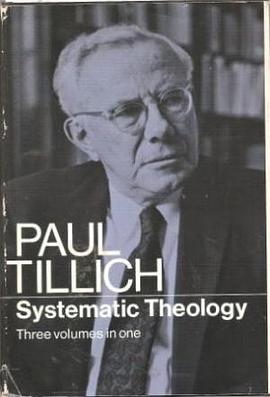
This is the first part of Paul Tillich's three-volume Systematic Theology, one of the most profound statements of the Christian message ever composed and the summation and definitive presentation of the theology of the most influential and creative American theologian of the twentieth century.
In this path-breaking volume Tillich presents the basic method and statement of his system—his famous "correlation" of man's deepest questions with theological answers. Here the focus is on the concepts of being and reason. Tillich shows how the quest for revelation is integral to reason itself. In the same way a description of the inner tensions of being leads to the recognition that the quest for God is implied in finite being.
Here also Tillich defines his thought in relation to philosophy and the Bible and sets forth his famous doctrine of God as the "Ground of Being." Thus God is understood not as a being existing beside other beings, but as being-itself or the power of being in everything. God cannot be made into an object; religious knowledge is, therefore, necessarily symbolic.
In volume2 , the second of his three-volume reinterpretation of Christian theology, Paul Tillich comes to grips with the central idea of his system—the doctrine of the Christ. Man's predicament is described as the state of "estrangement" from himself, from his world, and from the divine ground of his self and his world. This situation drives man to the quest for a new state of things, in which reconciliation and reunion conquer estrangement. This is the quest for the Christ.
In volume 3, the third and last of his Systematic Theology, Paul Tillich sets forth his ideas of the meaning of human life, the doctrine of the Spirit and the church, the trinitarian symbols, the relation of history to the Kingdom of God, and the eschatological symbols. He handles this subject matter with powerful conceptual ability and intellectual grace.
The problem of life is ambiguity. Every process of life has its contrast within itself, thus driving man to the quest for unambiguous life or life under the impact of the Spritual Presence. The Spritual Presence conquers the negativities of religion, culture, and morality, and the symbols anticipating Eternal Life present the answer to the problem of life.
作者简介
Paul Tillich (1886-1965) held distinguished positions at several German universities before immigrating to the United States in 1933 where he taught at Harvard University and the University of Chicago. His many publications include The Courage to Be, a three-volume treatise entitled Systematic Theology, and Theology of Culture.
目录信息
Part I. Reason and Revelation
I. Reason and the Quest for Revelation
II. The Reality of Revelation
Part II. Being and Good
I. Being and the Question of God
II. The Reality of God
Part III - Existence and the Christ
I. Existence and the Quest for the Christ
II. The Reality of the Christ
Part IV - Life and the Spirit
I. Life, Its Ambiguities, and the Quest for Unambiguous Life
II. The Spritual Presence
III. The Divine Spirit and the Ambiguities of Life
IV. The Trinitarian Symbols
Part V - History and the Kingdom of God
Introduction
I. History and the Quest for the Kingdom of God
II. The Kingdom of God within History
III. The Kingdom of God as the End of History
· · · · · · (收起)
读后感
用户评价
这本书的语言风格着实让人又爱又“恨”——爱其精确严谨,恨其时常需要查阅词典。它显然不是为轻松的午后阅读而准备的,作者对术语的运用达到了吹毛求疵的地步,每一个词汇的选择似乎都承载着数百年的神学辩论历史。我发现自己不得不频繁地使用旁注,用来记录那些源自拉丁文或希腊文的专业术语及其历史演变。但这恰恰是它的魅力所在:它拒绝走捷径,它坚持用最精准的语言来描绘最精妙的真理。对于那些已经具备一定神学基础,渴望提升专业深度的读者而言,这无疑是一座宝库。它挑战你的理解极限,让你在每一次啃读中都能发现新的层次。那种攻克难关后的豁然开朗,是肤浅阅读所无法提供的智力满足感。可以说,它更像是一本“教人如何思考”的神学教科书,而非仅仅是“告知你信什么”的入门指南。
我最近在寻找一本能够系统梳理基督教信仰核心教义的深度读物,然而市面上大多数同类书籍要么过于碎片化,要么就是陷在特定的宗派视角里无法自拔。我尤其欣赏这本书在构建整体框架时的那种宏大视野,它似乎并没有急于跳入细节的泥潭,而是先将整个神学大厦的基石和梁柱清晰地勾勒出来。那种逻辑的层层递进,从上帝论到人论,再到基督论和救赎论,每一步都像是经过精密计算的几何推导,严丝合缝,不留一丝冗余。阅读过程中,我不断地停下来,试图在自己的认知地图上标记这些关键节点,发现它提供的不仅仅是“是什么”,更是“为什么会是这样”的深刻解析。它迫使你跳出日常的祷告和礼拜的惯性思维,去审视那些支撑整个信仰体系的哲学和历史基础。这种结构化的梳理能力,对于构建一个稳固的、能够抵御质疑的个人信仰体系,具有不可估量的价值。
这本书在理论构建上的深度是毋庸置疑的,但让我真正感到惊喜的是,它在论述的最后,似乎总能以一种微妙的方式,将那些高悬于空的形而上学讨论,重新锚定回具体的信徒生活实践中。例如,在讨论完至高无上的上帝主权后,它会紧接着探讨这对普通人在面对日常苦难时的意义;在深入剖析了圣灵的工作后,它会回到个人敬虔和教会团契的具体层面。这种从“宏观理论”到“微观应用”的无缝衔接,避免了神学沦为空谈的风险。它提醒读者,所有的系统神学最终目的,是为了更清晰、更虔诚、更有意义地活出信仰。这种内在的张力与平衡,使得这本书在保持其学术严谨性的同时,也散发着一股温暖而实际的力量,激励人去思考,去生活,去敬拜。
作为一个在不同文化背景下学习过一些西方思想史的人,我特别关注这本书处理历史脉络和跨文化对话的方式。我惊喜地发现,它在阐述那些似乎是铁板钉钉的教义时,并没有采取一种“唯我独尊”的姿态。相反,它非常坦诚地展示了历史上的主要争论点、那些神学家们在面对时代挑战时所做的艰难抉择,以及不同学派之间微妙的张力。它没有回避那些复杂的历史修正和神学演变过程,而是将它们作为理解当代教义不可或缺的一部分来呈现。这使得阅读体验变得异常丰富,仿佛置身于一个由历代思想家参与的跨时空圆桌会议中,倾听他们对永恒议题的探讨。这种对历史复杂性的尊重,大大提升了本书的客观性和说服力,让读者得以在理解教义的同时,也学会了如何批判性地看待信仰的传承。
这本书的装帧设计着实让人眼前一亮,那种厚重且带着一丝复古气息的封面材质,拿在手里就有一种沉甸甸的知识感。内页的纸张选择也非常考究,触感温润,即便是长时间阅读也不会感到刺眼,这对于一本严肃的学术著作来说,无疑是极大的加分项。排版上,页边距的留白恰到好处,字体选择既有传统神学书籍的庄重感,又兼顾了现代读者的易读性,让人在深入研读复杂的概念时,视觉疲劳感能得到有效缓解。不过,我个人认为,如果能增加一些彩色的插图或者图表来辅助理解那些抽象的教义架构,对于初次接触这个领域的读者可能会更加友好一些,尽管目前的黑白风格保持了高度的学术纯粹性。整体来看,出版方在书籍的实体呈现上,无疑是下足了功夫,它不仅仅是一本书,更像是一件值得珍藏的工艺品,光是放在书架上,都能提升整个阅读空间的格调。每一次翻开它,都能感受到制作者对于“系统神学”这一主题应有的敬畏与专业态度。
扫了一遍 给明年481铺路
原版推荐。
原版推荐。
扫了一遍 给明年481铺路
扫了一遍 给明年481铺路