
具体描述
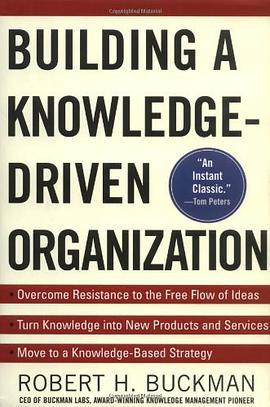
'With knowledge [as] the only source of sustainable advantage, bringing knowledge effectively to bear on customer problems is Secret No. 1 to success. Bob Buckman's story of turning a traditional company into something completely new and different is both practical and inspiring. "Building a Knowledge-Driven Organization" should become an instant classic' - Tom Peters.'Buckman Labs may have been the first company to realize that speed of knowledge sharing was a driver of cash flow and competitive advantage. Buckman pioneered collaboration around the globe to solve customer problems and create new business. This book is a powerful record of Bob Buckman's two decades of leadership and experience creating the deep cultural and human context for knowledge - and cash - to flow. If you want to know what works - and what doesn't - read this book' - Carla O'Dell, Ph.D., President, American Productivity and Quality Center, and author of "If Only We Knew What We Know: The Internal Transfer of Knowledge and Best Practices".' A must-read for executives trying to drive a knowledge management program, or for that matter any technology-based initiative' - Dave Snowden, Director of IBM's Cynefin Centre for Organisational Complexity. 'Bob Buckman - arguably the first CEO to personally lead a knowledge-based corporate strategy - combines a bold vision with practical tips for how organizations can become team-based and knowledge- and solutions- driven' - Brook Manville, Chief Learning Officer, Saba Software; Former Partner and Director of Knowledge Management, McKinsey. 'Buckman Labs' technical experts and far-flung sales force conduct dozens of virtual conversations each day, trading tips on arcane points of paper and leather making, water purification and sewage treatment. In the process, they've made this closely held, Memphis Tennessee chemical company with $360 million in sales, a leading practitioner in the emerging field of knowledge management' - "The Wall Street Journal".'Buckman Labs has become a Mecca for other companies looking for "how-to" lessons in the art and science of knowledge management. Executives from many Fortune 500 companies have made the pilgrimage to look and learn from a company that is fast, global, and interactive, and built on a system that is simple, powerful, and revolutionary' - "Fast Company".In the early 1980's, when Buckman Laboratories was scrambling to meet the rapidly changing needs of its customers, CEO Robert Buckman realized that an organization positioned for the future would have to be organized around knowledge - creating it, sharing it, and applying it - rather than around traditional corporate hierarchies and systems. He embraced this belief, and created a knowledge-sharing culture among Buckman Labs' 1400 associates serving in 80 countries. Buckman Labs became the undisputed pioneer and leader in implementing knowledge management."Building a Knowledge-Driven Organization" is a practical primer on how your managers and employees can move from "hoarding" knowledge in order to gain power to "sharing" it - building a global strategy that will allow your organization to respond faster than your competition to any customer's need, anywhere. The book focuses on the hardest part of knowledge management - the people side - explaining exactly what it takes to get your employees to contribute to a knowledge system. Buckman explains how to turn a fragmented, geographically dispersed group of people and information into a seamless array of knowledge that can be directed whenever and wherever it is needed. He reveals that the greatest challenges are not technical but political - and explains how you can effectively orchestrate a culture change in your organization, drawing from the hard-won lessons learned by Buckman Laboratories in implementing its award-winning knowledge systems.You'll discover, as Buckman did, how to: be customer driven and customer centric in your knowledge sharing; break down hierarchies and build a knowledge-based corporate strategy; motivate and enable employees to share their expertise around the organization; implement the organizational values and climate of trust required for a knowledge sharing culture; and, push organizational knowledge to the front lines to solve customer problems and create new products. "Building a Knowledge-Driven Organization" will show you how to solve your customers' problems rapidly, share best practices, increase productivity, and produce tremendous results.
作者简介
目录信息
读后感
用户评价
坦率地说,阅读这本书的过程,更像是一场深刻的自我反思和组织架构审视。我原以为组织转型无非是引入新的CRM或ERP系统,但作者的视角更为宏大和根本。他将焦点放在了组织文化的塑造上,认为技术只是实现知识驱动的“赋能者”,而真正的引擎是人的思维模式和协作意愿。书中花了大量篇幅讨论“知识孤岛”的成因,分析了绩效考核体系、晋升机制中可能存在的反作用力——比如,当奖励仅仅基于个人业绩而非知识分享时,员工自然倾向于囤积信息。这种对组织行为学的深刻洞察,远远超出了传统的商业管理范畴。我特别喜欢其中关于“心理安全感”的论述,强调只有在一个允许犯错、鼓励提问的环境中,知识的流动才会真正顺畅。这种对“软性”因素的重视,让整本书的论述极具人文关怀,也更有说服力。它不再是冰冷的技术手册,而是一份关于如何打造一个更具学习能力、更具韧性的团队的“组织心理学教科书”。
这本书的叙事风格非常权威却不失亲切,它巧妙地平衡了学术的严谨性和实践的可操作性。不同于那些只引用了少数成功案例的书籍,本书似乎吸纳了海量的行业经验,并通过大量的对比分析,展示了不同组织在面对相似挑战时所采取的知识战略差异。例如,它深入剖析了几家截然不同行业的企业,如何根据自身的知识密度和市场反应速度,定制出独一无二的知识架构。这种多维度的案例展示,避免了“一刀切”的解决方案陷阱。此外,作者在讨论知识更新迭代的紧迫性时,引入了“知识半衰期”的概念,这个比喻极其形象,提醒着我们即便是昨天的真理,在今天也可能成为阻碍进步的包袱。因此,这本书不仅教我们如何“建立”知识体系,更重要的是,它教会我们如何“淘汰”和“重塑”旧知识,这在技术迭代如此之快的今天,显得尤为重要。
我必须承认,最初翻开这本书时,我对其中涉及的“认知负荷管理”和“知识交互界面设计”感到一丝犹豫,觉得可能过于偏向技术理论。然而,读完后我发现,这正是本书的高明之处。作者没有把知识管理简单地等同于文档归档,而是将其视为一种深层次的“人机交互”问题。他强调,知识的载体——无论是一个数字平台、一个协作工具,还是一个会议流程——都必须符合人类大脑的认知规律,才能实现高效的吸收和调用。例如,书中对信息可视化和知识导航逻辑的讨论,直接指向了我们在日常工作中经常遇到的“信息过载”困境。它提供的方法论,指导我们如何设计出“少即是多”的知识体验,确保员工在需要信息时,能以最低的认知成本瞬间获取,而不是在无尽的搜索和筛选中消耗宝贵的注意力。这不仅仅是一本关于企业战略的书,更是一本关于如何优化人类集体心智在商业活动中表现的实用手册。
这本探讨组织如何驾驭信息洪流、将其转化为核心竞争力的著作,简直是为我们这个信息爆炸时代量身定做的指南。作者并非空泛地谈论“数据很重要”,而是深入剖析了知识在企业生命周期中各个环节的具体流转机制。我尤其欣赏其中对于“隐性知识显性化”这一难题的精妙处理。书中细致描绘了几种极具操作性的框架,它们不再是高高在上的理论模型,而是可以直接映射到日常工作流程中的实用工具。比如,它详细阐述了如何通过结构化的访谈、社区实践以及特定的知识地图绘制方法,将被经验丰富的老员工头脑中的“直觉”和“诀窍”系统地提取出来,并转化为可供新员工快速学习和应用的标准操作程序或知识库条目。这种对知识捕获、存储、共享和应用全链条的系统性梳理,使得“知识管理”这个听起来有些枯燥的领域,变得无比生动和具有价值感。它让我深刻认识到,一个缺乏有效知识驱动的组织,即使拥有顶尖的技术和人才,也只会像一艘没有罗盘的大船,在变幻莫测的市场风浪中随波逐流。这本书真正做到了将知识视为一种可被战略性部署的战略资产,而非仅仅是纸面上的文件堆砌。
这本书的结构安排非常精妙,它采取了一种层层递进的逻辑,从高屋建瓴的战略视野,逐步落脚到具体的执行层面,使得即便是跨部门的管理者也能找到自己的切入点。我印象最深的是关于“知识价值评估”的部分。很多企业在知识管理项目上投入巨大却收效甚微,根本原因在于缺乏量化知识产出和价值回报的机制。作者提出了一套非常务实的方法论,它不依赖于那些难以捕捉的“创新数量”,而是通过分析知识应用后带来的具体效率提升、错误率下降或客户满意度增长等关键指标,来反向验证知识资产的真实价值。这种“价值驱动的知识治理”思路,简直是教科书级别的。它提供了一种强大的论据,能够帮助我们在预算审批或项目推广时,清晰地向决策层展示,知识投资并非成本中心,而是明确的利润驱动力。这种清晰的ROI视角,极大地提升了本书在实际商业环境中的应用价值。