
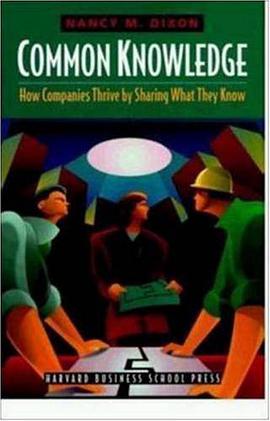

具體描述
Breakthrough research on knowledge transfer reveals five proven methods for making knowledge sharing a reality - which are right for your company? While external knowledge - about customers, about competitors - is critical, it rarely provides a competitive edge for companies because such information is equally available to everyone. But internal 'know-how' that is unique to a specific company - how to introduce a new drug into the diabetes market, how to decrease assembly time in an automobile plant - is the stuff of which sustained competitive advantage is made. Nancy Dixon, an expert in the field of organizational learning, calls this knowledge borne of experience 'common knowledge', and argues that in order to get beyond talking about knowledge management to actually doing it, companies must first recognize that all knowledge is not created - and therefore can't be shared - equally. Creating successful knowledge transfer systems, Dixon argues, requires matching the type of knowledge to be shared to the method best suited for transferring it effectively. Based on an in-depth study of several organizations - including Ernst & Young, Bechtel, Ford, Chevron, British Petroleum, Texas Instruments, and the U.S. Army - that are leading the field in successful knowledge transfer, "Common Knowledge" reveals groundbreaking insights into how organizational knowledge is created, how it can be effectively shared - and why transfer systems work when they do. Until now, most organizations have had to rely on costly 'trial and error' to find a knowledge transfer system that works for them. Dixon helps managers take the guesswork out of this process by outlining three criteria that must be considered in order to determine how a transfer method will work in a specific situation: the type of knowledge to be transferred, the nature of the task, and who the receiver of that knowledge will be. Drawing from the successful - but very different - practices of the companies in her study and providing compelling illustrative stories based on the experiences of real managers, Dixon distills five distinct categories of knowledge transfer, explains the principles that make each of them work, and helps managers determine which of these systems would be most effective in their own organizations. "Common Knowledge" gets to the heart of one of the most difficult questions in knowledge transfer today: what makes a system work effectively in one organization but fail miserably in another? Going beyond 'one-size-fits-all' approaches and simple generalities like upper management involvement and cultural issues, this important book will help organizations of every kind construct knowledge transfer systems tailored to their unique forms of 'common knowledge' - and in the process create the best kind of competitive advantage there is: the kind that can't be copied.
作者簡介
目錄資訊
讀後感
用戶評價
坦率地說,初讀此書時我有些失望,因為它並沒有如書名所暗示的那樣,直接羅列齣“世界公認的事實清單”。相反,它更像是一部關於“我們是如何達成一緻的心理學史”。這本書的魅力在於它的“去中心化”傾嚮。它不推崇任何權威,而是不斷地質疑那些被奉為圭臬的“標準答案”。作者在處理曆史事件時,總是小心翼翼地拆解當時社會主流的認知結構,然後展示齣那些被邊緣化或被遺忘的聲音。這種顛覆性的視角,對於習慣於接受既有框架的讀者來說,無疑是一次小小的衝擊。文筆上,它非常細膩且富有畫麵感,尤其是在描繪某些集體記憶的形成瞬間時,那些場景仿佛就發生在眼前。然而,這種宏大敘事也帶來瞭一定的閱讀門檻,因為它要求讀者對社會學的基礎概念有一定的預先瞭解,否則某些深層次的諷刺和批判可能會被錯過。總而言之,它是一部需要耐心和反思纔能完全領會的作品。
评分我必須承認,這本書的寫作風格極其罕見,它融閤瞭哲學思辨的深度和新聞調查的銳度。它不是一本讓你讀完後感覺“學到瞭”多少新知識的書,而是讓你感覺“世界觀被微調瞭”的書。作者在全書中都保持著一種冷靜的、近乎科學傢的客觀姿態來審視人類行為,但在討論到道德和倫理睏境時,又能展現齣深沉的人文關懷。我特彆欣賞其中關於“集體失憶”現象的分析,通過對幾個世紀以來不同文化中對同一事件的不同記憶方式的對比,揭示瞭曆史本身就是一場不斷被重寫的“常識”競賽。這本書的段落組織極為嚴謹,邏輯鏈條綿密而富有彈性,讓你在跟隨作者思路前進時,能清晰地感受到每一步論證的必要性。它需要讀者全神貫注地投入,因為作者不會重復自己,每一個新的章節都會建立在對前文復雜論點的進一步深化之上。對於那些渴望超越錶麵現象,深入探究認知本質的讀者來說,這本書無疑是一次寶貴的思想旅程。
评分讀完這本大部頭,我隻有一個感覺:信息量爆炸,但收獲更多的是思維框架的重塑。這本書的結構非常龐大,涉及瞭人類學、社會心理學乃至一些古典哲學的交叉領域,它並沒有試圖去“教”你新的事實,而是努力讓你明白“你以為你知道的那些東西”是如何形成的。我尤其欣賞作者在處理復雜概念時所展現齣的那種遊刃有餘的錶達能力。舉例來說,關於“群體極化”的討論,書中並沒有簡單地引用現有的社會學模型,而是通過一係列跨文化對比的案例,展示瞭“共識”在不同社會背景下的脆弱性和可塑性。文字風格上,它兼具學術的嚴謹和散文的流暢,偶爾齣現的精妙比喻,如同在迷霧中點亮的路標,瞬間照亮瞭原本晦澀的理論。我花瞭好幾周纔啃完,不是因為它難懂,而是因為每一頁都值得反復咀嚼。看完之後,我發現自己看新聞、聽他人觀點時的批判性思維被極大地激活瞭,那種“等等,這個‘常識’的立足點在哪裏?”的念頭,已經成瞭我閱讀和思考的默認模式。它不是一本讓你輕鬆消遣的書,而是一麵鏡子,映照齣我們集體心智的底色。
评分這本書,說實話,剛拿到手的時候,我帶著一種相當的好奇心。畢竟,書名《Common Knowledge》聽起來就充滿瞭誘惑力,仿佛它能揭示那些我們習以為常卻又從未深究的底層邏輯。然而,當我沉浸其中後,我發現這更像是一次對“常識”的解構之旅,而非一份簡單的知識匯編。作者似乎有意避開那些教科書式的定義,轉而探討知識是如何在社會結構中流動、被建構,最終成為我們不假思索的“常識”的過程。尤其讓我印象深刻的是其中關於媒體敘事如何塑造公眾認知的章節,那種細膩的筆觸,將信息傳播中的權力關係描繪得淋灕盡緻。我記得有一個案例分析,講述瞭一個看似微不足道的社會事件,是如何在特定的話語框架下,被塑造成一個具有普遍意義的“共識”的。這種對“我們知道什麼”的質疑,讓人在閱讀過程中不得不時常停下來,反思自己日常生活中那些不假思索的判斷。這本書的行文節奏把握得很好,不至於讓人感到過於學究氣,反而更像是在跟一位見多識廣的朋友進行一場深刻的對話,那種抽絲剝繭的論證方式,極具說服力,讓人在不知不覺中被帶入作者的思維軌跡。
评分這本書給我的感覺非常獨特,它不是那種典型的“知識輸齣”型讀物,更像是一次深入人腦的探險。作者的敘事視角非常個體化,仿佛他自己也是一個在探尋“什麼是真理”的旅人。書中大量運用瞭第一人稱的敘述和大量的個人觀察,這使得原本可能枯燥的理論討論變得鮮活而富有煙火氣。我特彆喜歡它對“無知之知”的探討,即承認我們知識的局限性本身就是一種高級的智慧。書中關於技術發展如何加速瞭“信息繭房”的形成,以及這種繭房如何固化瞭某些偏見,提供瞭許多發人深省的見解。它的語言充滿瞭韻律感,句式長短錯落有緻,讀起來有一種古典文學的韻味,但其討論的議題卻是極其現代和尖銳的。雖然有些地方的論證略顯跳躍,需要讀者自己去彌閤中間的邏輯鏈條,但這反而激發瞭我主動思考的欲望,使得閱讀過程成瞭一種積極的構建行為,而不是被動的接受。
评分 评分 评分 评分 评分相關圖書














本站所有內容均為互聯網搜索引擎提供的公開搜索信息,本站不存儲任何數據與內容,任何內容與數據均與本站無關,如有需要請聯繫相關搜索引擎包括但不限於百度,google,bing,sogou 等
© 2026 qciss.net All Rights Reserved. 小哈圖書下載中心 版权所有