
具体描述
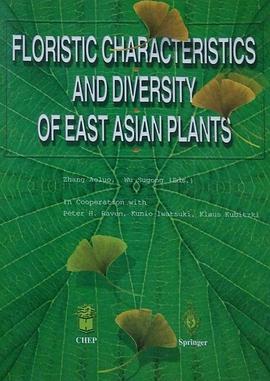
East Asia an are
作者简介
目录信息
A Proposal for a New Floristic Kingdom (Realm) - the E. Asiatic Kingdom, its Delineation and Characteristics
Wu, Z. / Wu, S. | 1998
43
History of the modern flora of China
Axelrod, D. I. / Al-Shehbaz, I. / Raven, P. H. | 1998
56
Origins of east and south east Asian plant diversity
Kubitzki, K. / Krutzsch, W. | 1998
71
East Asian elements in the plio-pleistocene floras of Italy
Martinetto, E. | 1998
88
The east Asian plants in the dry gorge valley of southwest China
Jin, Z. | 1998
91
The Gymnosperms of Vietnam
Nguyen Tien Hiep | 1998
104
The Flora of China on the World Wide Web(WWW)
Brach, A. R. | 1998
107
A review of the orchid flora of Xishuangbanna, southern Yunnan
Chen, S. / Tsi, Z. | 1998
114
Floristics of Philippine Vacciniun (Ericaceae)
Vander Kloet, S. P. | 1998
120
On the systematic structure of the Vietnamese flora
Loc, P. K. | 1998
130
The origin of tropical Chinese Mosses
Tan, B. C. / Lin, P.-J. | 1998
137
On the origin, differentiation and dispersal of the Hamamelidaceae
Zhang, Z. / Lu, A. | 1998
154
An analysis of the floral composition in east Guangdong
Chen, W. | 1998
157
Floristic feature and diversity of seed plants in Dehang region, Hunan
Chen, G. / Gu, Z. / Li, H. / Zhang, X. | 1998
163
The distribution patterns of Umbelliferae in east China and Japan
Pu, F. | 1998
169
Studies on the flora of Dabieshan and interrelationship between the southern and northern slopes
Liu, P. / Guo, S. | 1998
175
The characteristics of steppe region flora in Inner Mongolia and its relationship with east Asian flora
Ma, Y. / Liu, Z. / Zhao, Y. et al. | 1998
188
The endemic plants and floristic characteristics in Alashan-ordos biodiversity center
Zhu, Z. / Ma, Y. / Liu, Z. / Zhao, Y. | 1998
198
Study on the floristic diversity and the extensive relationship of the southern great Khingan mountains
Liang, C. / Wang, W. / Liu, Z. / Liu, S. | 1998
212
Aquatic vascular plants in the lakes of China: a preliminary flora analysis
Li, W. / Zheng, Z. | 1998
218
A phytogeographical study of seed plants of the Wuliang Shah Range
Peng, H. / Wu, Z. | 1998
223
A numerical analysis of endemism for Caragana (Fabaceae)
Zhang, M. | 1998
228
A floristic study on the seed plants of southwest Guizhou
Deng, C. | 1998
241
A study on the floristic characteristics of the Houhe Nature Reserve in the southwest Hubei
Wang, W. / Fu, Y. / Yang, Y. et al. | 1998
248
Fuzzy graphic analysis of the distribution pattern of Chinese Dioscorea L.
Guo, S. / Liu, P. | 1998
253
Species/area of primary tropical rainforests of south Yunnan (China) a with special reference to sampling area
Zhu, H. / Wang, H. / Xu, Z. | 1998
260
Studies on the angiospermae flora of Yunkai Mountain - the analysis of families
Fan, H. / Liu, N. | 1998
269
A Comprehensive Study of "Magnoliidae" sensu lato - with Special Consideration on the Possibility and the Necessity for Proposing a New "Polyphyletic- Polychronic-Polytopic" System of Angiosperms
Wu, Z. / Lu, A. / Tang, Y. | 1998
335
How to deal with complex species with two examples from east Asian symplocos
Nooteboom, H. P. | 1998
341
Studies on the development of Gametophytes of 4 species in family Woodsiaceae
Bao, W. / Lin, X. / Wang, Q. / Aur, Z. | 1998
347
Systematic study of fern genus Lindsaea in Hainan, China
Lin, S. / Iwatsuki, K. | 1998
352
Comparative floral anatomy of Whytockia(Gesneriaceae) endemic to China
Wang, Y. / Pan, K. | 1998
367
Taxonomy and phylogeny of Euphorbiaceae in Vietnam
Nguyen Nghia Thin | 1998
384
rbcL sequence divergence and phylogenetic relationships in Liliales
Zabta Khan Shinwari / Hayashi, K. / Terauchi, R. / Kawano, S. | 1998
394
Isozyme variation in Chinese natural populations of wild soybean
Pei, Y. / Wang, L. / Ge, S. | 1998
398
Studies on karyotypes of nine species in Ribes L. from northeast China
Ding, X. | 1998
405
Phytogeny and progression of characters in old world Astragali (Leguminosae)
Podlech, D. | 1998
408
Nelumbo: biology and systematics of an exceptional plant
Borsch, T. / Neinhuis, C. / Barthlott, W. | 1998
417
Systematic evolutionary study of Poaceae (Gramineae) and its relatives using leaf epidermis
Chen, S. / Jin, Y. / Wu, Z. / Liu, X. | 1998
426
Pollen morphology of Theoideae and its systematic significance
Wei, Z. / Bijan, D. | 1998
437
Has biodiversity increased under human influence?
Iwatsuki, K. | 1998
440
Biodiversity resources in the Himalayan region
Pei, S. | 1998
454
Diversity of the rice genepool and its sustainable utilization
Baorong, L. | 1998
461
Medicinal plant diversity and its conservation in southern India
Tandon, V. | 1998
· · · · · · (收起)
读后感
用户评价
我对这本书的期待,更多是源于对区域生态系统复杂性的敬畏。东亚,横跨热带雨林到寒温带针叶林,这种跨越纬度和海拔的极端环境梯度,必然催生出极其丰富的生物适应策略。我迫切想了解,书中是如何系统梳理和总结这些多样性的?是按照科属进行横向比较,还是沿着地理梯度进行纵向剖析?我希望看到关于东亚特有植物群落结构和功能群组的深入分析。比如,在季风气候的强烈影响下,哪些植物的形态特征(如叶的革质化程度、根系深度)是它们得以存活的关键?书中是否会探讨外来种的入侵历史及其对本土植物多样性的冲击?作为一个关注可持续发展的读者,我希望这本书能够提供一个坚实的科学基础,帮助我们理解如何保护这片珍贵的植物宝库。如果书中能加入一些关于全球气候变化背景下,东亚植物区系未来可能演变的预测性分析,那就更具前瞻意义了。
这本书,光是书名《东亚植物区系特征和多样性》就带着一股浓郁的学术气息,让人不由自主地联想到浩瀚的植物学知识海洋。作为一名对自然历史充满好奇的业余爱好者,我被它厚重的封面和严谨的标题所吸引,期待能在这本书里找到关于我们身边那些熟悉或陌生的植物的深度解析。我特别想知道,作者是如何勾勒出东亚这一广袤地理区域的植物区系边界的?是基于气候的巨大差异,还是更侧重于地质历史的变迁?我希望能看到关于特有种的详细讨论,毕竟东亚被誉为全球生物多样性的热点之一,其中蕴藏的生命演化故事一定非常引人入胜。例如,书中会不会深入探讨竹子或杜鹃花属在区域内的起源和扩散路径?我期望看到的不仅仅是物种名录的堆砌,而是能够将地理、气候、土壤等非生物因素与植物的分布、适应性紧密结合起来的叙事框架。如果能配上精美的彩图和清晰的分布图,那就更完美了,毕竟,光是想象那些高山峡谷中的独特植被就足够令人心驰神往了。我希望这本书能够成为一座桥梁,将晦涩的植物地理学概念转化为可感知的自然景观。
这本书的排版和装帧给我一种强烈的专业感,暗示着其内容必定是经过极其审慎的考证和编辑的。我猜想,这本书对东亚植物的“多样性”的阐述,可能不仅仅停留在物种数量的统计上,而是深入到遗传多样性层面。书中会不会引入最新的生物信息学工具和大规模测序数据,来揭示物种内的遗传分化和历史种群动态?这对于理解物种的保护潜力至关重要。我特别关注作者对“多样性热点”的界定标准和识别方法。是采用物种丰富度、特有性指数,还是其他更复杂的生态学指标?如果书中能够提供不同划分方法下的对比分析,那将是一次极好的学术思辨之旅。另外,对于那些已经灭绝或濒危的东亚代表性植物,书中是否记录了它们最后的栖息地信息,并探讨了导致其衰退的环境因素?这类历史性的记录,对于当代保护工作来说,是无法替代的文献价值。
从书名来看,《东亚植物区系特征和多样性》似乎在强调一种宏观的、区域性的视野。我希望这本书能提供一个清晰的、易于理解的区系演化时间线。例如,东亚植物区系中哪些成分是古老的孑遗物种,哪些是新生代快速演化的新群体?书中是否有详细的化石证据或生物地理学证据来支撑这些推断?我尤其好奇作者如何处理东亚与周边区域(如古北界、印度-喜马拉雅地区)的植物联系与分异。这种比较视角能更好地凸显东亚区系的独特性。我设想的理想章节结构是,先是宏观的地理划分和气候背景,接着是各大优势科属的详细特征描述,最后落脚于多样性保护和未来展望。如果书中能用生动的案例来阐释复杂的区系规律,比如选取几个具有代表性的物种群,追踪它们在东亚的迁移和适应历程,那就更能够吸引非专业读者,将严肃的科学论述转化为引人入胜的自然历史故事。
说实话,拿到这本书时,我的第一反应是它非常“硬核”。文字密度大得惊人,术语层出不穷,这显然不是一本供我在咖啡馆里轻松翻阅的消遣读物。我猜想,这本书的重点必然放在了对东亚植物区系划分的科学性论证上,可能涉及大量的系统发育学分析和分子生物学证据。我好奇作者如何处理不同植物分类群在区域内的演化关系,尤其是在板块漂移和冰期-间冰期循环对物种迁移和隔离的影响方面,书中必然会有非常精辟的论述。这本书的价值可能主要体现在其详尽的区域植物地理学模型构建上。它或许会提供一套全新的、更精细的东亚植物区系划分方案,并用详实的数据支撑其观点,这对于专业研究人员来说无疑是宝贵的参考资料。我甚至在想,书中会不会提到一些与中国、日本、朝鲜半岛等核心区域植物交流的古老通道,比如曾经存在或已经消失的陆桥,那些环境的变迁如何在微观层面上塑造了今天的植被格局。这本书的气场,很明显是面向高等院校的教材或科研专著的。