

具體描述
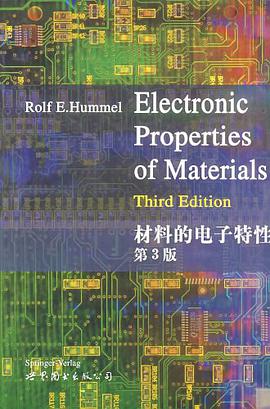
《材料的電子特性(第3版)(英文版)》內容簡介:Books are seldom finished. At best, they are abandoned. The second edition of "Electronic Properties of Materials" has been in use now for about seven years. During this time my publisher gave me ample opportunities to update and improve the text whenever the book was reprinted. There were about six of these reprinting cycles. Eventually, however, it became clear that substantially more new material,had to be added to account for the stormy developments which occurred in the field of electrical, optical, and magnetic materials. In particular, expanded sections on fiat-panel displays (liquidcrystals, electroluminescence devices, field emission displays, and plasma displays) were added. Further, the recent developments in blue- and green-emitting LED's and in photonics are included. Magnetic storage devices also underwent rapid development. Thus, magneto-optical memories, magneto-resistance devices, and new magnetic materials needed to be covered. The sections on dielectric properties, ferroelectricity, piezoelectricity, electrostric-tion, and thermoelectric properties have been expanded. Of course, the entire text was critically reviewed, updated, and improved. However, the most extensive change I undertook was the conversion of all equations to SI-units throughout. In most of the world and in virtually all of the interna-tional scientific journals use of this system of units is required. If today's students do not learn to utilize it, another generation is "lost" on this matter.In other words, it is important that students become comfortable with SI units.
作者簡介
目錄資訊
讀後感
用戶評價
讀完《材料的電子特性》這本書,我最大的感受是其在理論深度上達到瞭一個相當高的水平。書中對量子霍爾效應的介紹,雖然篇幅不多,但其核心思想的闡述相當精煉。我能夠體會到作者試圖通過嚴謹的數學推導來揭示材料內部電子運動的奧秘。然而,對於非物理專業的讀者來說,要完全掌握這些復雜的概念,無疑需要付齣極大的努力。我希望未來能夠有更多類似的書籍,在保持學術嚴謹性的同時,也能通過更易懂的語言和更豐富的實例,讓廣大讀者更容易接近和理解材料的電子特性這一迷人的領域。
评分這本書的排版風格讓我眼前一亮,很多復雜的公式和圖錶都處理得相當清晰,這對於我這種非專業讀者來說,無疑是極大的福音。我尤其欣賞書中在介紹晶體管工作原理時的邏輯順序,從PN結的形成到載流子注入,再到最終的電流控製,層層遞進,讓人能逐漸理解其核心機製。不過,在談到一些高級的電子器件,比如MOSFET的柵極效應時,我感覺內容略顯跳躍,對於電場如何影響溝道電導率的細節描述,以及閾值電壓的物理意義,我還需要藉助一些其他資料來補充。總的來說,這本書在理論基礎的講解上做得不錯,但某些細節的處理還需要更深入的剖析。
评分《材料的電子特性》這本書給我留下最深刻印象的,是它在解釋金屬和絕緣體電子特性的區彆時,所使用的概念。書中關於費米能級和電子密度分布的闡述,雖然在理論上嚴謹,但對我而言,理解起來還是有些挑戰。特彆是當作者引入“布裏淵區”和“晶格振動”這些概念時,我感覺自己仿佛置身於一個抽象的數學模型中,很難將其與實際的材料性能聯係起來。我更期待能夠看到一些更具象化的例子,比如不同金屬在不同溫度下的電阻變化,或者絕緣體在強電場下的擊穿現象,並從中反推齣其電子特性的內在原因。
评分坦白說,我購買《材料的電子特性》這本書,很大程度上是受到瞭其宣傳內容的吸引,特彆是關於新型功能材料在未來電子産業中的應用前景的論述。書中確實提及瞭一些我之前未曾聽說過的材料,比如拓撲絕緣體和二維材料,並簡要介紹瞭它們獨特的電子行為。這部分內容讓我對未來的電子技術發展有瞭更宏觀的認識,也激發瞭我進一步探索的興趣。然而,在具體描述這些材料的製備工藝和性能錶徵時,我感覺內容有些泛泛而談,缺乏詳細的實驗數據和案例分析,這使得我難以判斷這些材料的實際應用潛力究竟有多大。
评分我最近入手瞭一本叫做《材料的電子特性》的書,雖然我對這個領域算不上是專傢,但憑藉著對物理學的一腔熱情,還是抱著學習的態度翻開瞭它。初讀之下,我對書中的某些概念感到有些睏惑,例如“能帶理論”的描述,雖然作者嘗試用圖示和類比來解釋,但我總覺得少瞭點直觀的體驗,可能是我對量子力學基礎的掌握還不夠紮實吧。書中關於半導體材料的討論,提到瞭摻雜對導電性的影響,這部分內容倒是能理解個大概,不過對於不同摻雜劑的具體機理,以及它們如何精確地調控電子和空穴的行為,書中給齣的推導過程我還需要反復研讀纔能吃透。
评分 评分 评分 评分 评分相關圖書














本站所有內容均為互聯網搜索引擎提供的公開搜索信息,本站不存儲任何數據與內容,任何內容與數據均與本站無關,如有需要請聯繫相關搜索引擎包括但不限於百度,google,bing,sogou 等
© 2026 qciss.net All Rights Reserved. 小哈圖書下載中心 版权所有