
具体描述
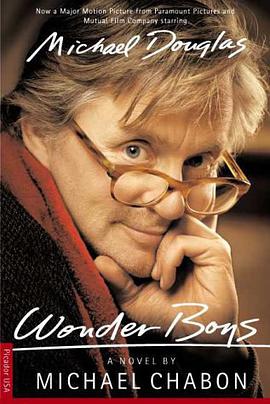
A modern classic, now in a welcome new edition, Wonder Boys firmly established Michael Chabon as a force to be reckoned with in American fiction. At once a deft parody of the American fame factory and a piercing portrait of young and old desire, this novel introduces two unforgettable characters: Grady Tripp, a former publishing prodigy now lost in a fog of pot and passion and stalled in the midst of his endless second book, and Grady’s student, James Leer, a budding writer obsessed with Hollywood self-destruction and struggling with his own searching heart. All those who love Michael Chabon’s The Yiddish Policemen’s Union and his Pulitzer Prize-winning The Amazing Adventures of Kavalier and Clay will find the same elegant imagination, bold humor, and undeniable warmth at work in Wonder Boys.
“[A] wise, wildly funny story . . . Chabon is a flat-out wonderful writer– evocative and inventive, pointed and poignant.”
–Chicago Tribune
“Whether making us laugh or making us feel the breathtaking impermanence of things, Michael Chabon keeps us wide awake and reading.”
–All Things Considered
“Beguiling and wickedly smart . . . There is first-rate satirical farce in Chabon’s novel but essentially it is something rarer: satirical comedy.”
–Los Angeles Times Book Review
From Publishers Weekly
Mixing comic?even slapstick?events with the serious theme of bright promise gone awry, Chabon has produced an impeccably constructed novel that sparkles with inventiveness and wit neatly permeated with rue. The once-promising eponymous "wonder boys" are Grady Tripp and Terry Crabtree, friends since college, where they both determined to make their mark in literature. Now they are self-destructive adults whose rare meetings occasion an eruption of zany events. Narrator Grady, a professor/novelist whose unfinished work-in-progress, Wonder Boys, stands at 2000-plus endlessly revised pages, has destroyed three marriages through compulsive philandering and a marijuana habit. Terry is a devil-may-care, sexually predatory editor who has patiently endured Grady's writing block but who tells Grady, when he arrives at the annual literary conference at Grady's small Pittsburgh college, that he expects to be fired momentarily from his job. Grady and Terry, later joined by the campus's newest potential "wonder boy," a talented but mendacious student named James Leer, set in motion a series of darkly funny misadventures. Farcical scenes arise credibly out of multiplying contretemps, culminating in a stoned Grady's wild ride in a stolen car in whose trunk rest a tuba and the corpses of a blind dog and a boa constrictor. All of this affords Chabon a solid platform for some freewheeling satire about the yearnings, delusions and foibles of writers and other folk. Throughout, his elegant prose, breathtaking imagery and wickedly on-target dialogue precisely illuminate his characters' gentle absurdities. The pace of this vastly entertaining novel never abates for a second, as we watch Grady slide inexorably into emotional and professional chaos. Above all, though, this is a feast for lovers of writing and books, with the author's fierce understanding of what Grady calls "the midnight disease," the irresistible, destructive urge of a writer to experience his characters' fates. Author tour.
Copyright 1995 Reed Business Information, Inc. --This text refers to an out of print or unavailable edition of this title.
From Library Journal
Chabon himself is something of a wonder boy; his first novel, The Mysteries of Pittsburgh, presided on the New York Times Best Sellers list for 12 weeks. Here, his eponymous heroes are Grady, an aging author attempting to write his chef-d'oeuvre, and his randy editor, Tripp.
Copyright 1994 Reed Business Information, Inc. --This text refers to an out of print or unavailable edition of this title.
作者简介
Michael Chabon is the bestselling and Pulitzer Prize-winning author of The Mysteries of Pittsburgh, A Model World, Wonder Boys, Werewolves in Their Youth, The Amazing Adventures of Kavalier and Clay, The Final Solution, The Yiddish Policemen's Union, Maps and Legends, Gentlemen of the Road, and the middle grade book Summerland.
目录信息
读后感
用户评价
如果非要用一个词来形容阅读这本书的感受,那一定是“疏离”,但这种疏离感并非是负面的,而是一种充满美感的冷峻。作者对于情感的描绘采取了一种极其克制的态度,你几乎看不到那种直白的、泪眼婆娑的感伤镜头,取而代之的是对环境和物体的近乎病态的关注。比如,主角对窗外那棵枯萎的梧桐树的描写,用了足足两页篇幅,每一片叶子的卷曲、每一根枝条的走向,都似乎映射着他内心深处某种无法言喻的、正在凋零的东西。这种“借物抒情”的手法被运用到了极致,作者似乎相信,物体比人类的语言更诚实,环境的细节比直接的情绪宣泄更具有穿透力。读到后面,你会发现自己开始不由自主地模仿这种观察方式,对身边寻常事物的细节开始产生一种新的、略带疏远的审视。这种疏离感形成了一种保护层,使得那些关于失败、关于失落的主题,得以在一种近乎学术研究的冷静中被剖析,反而更具震撼人心的力量,因为它没有贩卖廉价的同情,而是呈现了深刻的、无法逃避的现实结构。
这本书最让我印象深刻的,是它对“学术与生活边界”的模糊处理。它不是那种老套的“象牙塔外的世界”的挣扎故事,而是将学术研究的严谨性、逻辑链条,直接移植到了主角混乱、充满不确定性的日常生活中。你会看到人物在为了一道晦涩的理论而彻夜不眠时,用的逻辑推理和分析方法,竟然也用在了决定中午吃什么、如何躲避一个不想见的熟人上。这种跨界的思维模式让人耳目一新,它揭示了一个深刻的真相:我们所有的认知工具,无论是用于解构古代文本还是应对人际关系,本质上都是同一套工具箱里的东西,只是应用场景不同罢了。作者没有简单地歌颂知识的力量,而是展示了知识在面对人性、面对偶然性时的局限和荒谬。有几处情节处理得尤其精彩,将一个看似枯燥的学术辩论,突然转嫁到一场充满戏剧性的家庭冲突中,让读者在爆笑的同时,又感受到背后逻辑的必然性。这本书成功地将“智力活动”从一个抽象的概念,还原成了渗透在生活每一个缝隙中的、充满烟火气的行为。
这本书的叙事节奏把握得简直是教科书级别的,初读时会感到情节像慢镜头下的特写,每一个细节、每一个人物的微小动作都被放大审视。作者似乎对时间的流逝有着一种近乎偏执的关注,尤其是在描绘主角那些漫长、充满自我怀疑的午后时,那种被困住的、无法前行的感觉,通过细腻到近乎令人窒息的文字铺陈开来。我记得有一段描写主角对着一盏台灯沉思了近乎一页纸,那种光影在墙上跳跃、时间仿佛凝固的描写,初读时可能会让人觉得拖沓,但当你真正沉浸进去后,才会意识到这是在为后续的爆发积蓄能量。这种铺陈并非是为了炫技,而是服务于人物内心的动荡,每一个拖沓的句子、每一个冗长的内心独白,都在为最终的顿悟或崩溃搭建基石。我甚至能想象到作者在创作时,是如何反复打磨这些“无用”的篇幅,确保它们在看似散漫的外表下,蕴含着精确的心理学结构。整本书读下来,更像是一次深入人脑内部的潜水,你得适应那种缓慢的、有时略显压抑的水压,才能看到深海中那些奇异而美丽的发光生物。对于那些期待快节奏、情节跌宕起伏的读者来说,这可能需要一个适应期,但一旦你接受了它的呼吸频率,你会发现这种叙事带来的满足感是其他类型小说无法比拟的,它教会你如何去“慢读”一个故事。
从结构上看,这本书的宏大叙事野心昭然若揭,它试图通过聚焦于几个边缘人物的微观生活,去折射一个更广阔的时代病症,但它完成得却非常高明,完全没有沦为说教的陷阱。作者巧妙地设置了多条看似平行却又不断隐秘交汇的线索,这些交汇点往往不是通过戏剧性的冲突达成,而是通过一种近乎宿命论的巧合。比如,两个本不相干的人物,可能因为共同阅读过某本冷门诗集、或者同时出现在同一个破旧的咖啡馆里,他们的命运轨迹便被微妙地牵连起来,形成一种“蝴蝶效应”式的连锁反应。阅读过程中,我一直在脑中绘制一张巨大的关系图谱,试图理清人物之间的恩怨纠葛和知识渊源,而这种主动的梳理过程,本身就是阅读乐趣的一部分。它要求读者像对待一个复杂的棋局那样去阅读,预判每一步的潜在影响。最终,所有的线索汇聚成一个令人不安但又无比和谐的整体,你会意识到,书中描绘的每一个“失败者”,都是这个时代不可或缺的、被错置的齿轮,他们的“不合时宜”恰恰构成了这个时代最真实的侧影。
这本书的语言风格简直就像是上世纪那些最顶尖的意识流大师的私房笔记被公之于众,充满了那种略带讥诮、却又无比真诚的知识分子式的自嘲。它不像那种精心打磨、力求完美的文学作品,反而更像是从作者的脑海深处未经修饰地流淌出来的片段集合。我尤其欣赏作者在处理对话时那种羚羊挂角的跳跃性,人物之间的交流常常是言不及义的,他们说的A,心里的B,读者感受到的却是C。这种“言外之意”的张力贯穿始终,使得每一次角色间的互动都像一场微妙的心理战,你必须全神贯注去捕捉那些未说出口的潜台词和肢体语言的暗示。有那么几处对话,我甚至需要反复阅读三次,第一次是理解字面意思,第二次是体会语气,第三次才是捕捉到作者试图隐藏在那些日常寒暄下的哲学思考。这种阅读体验极具挑战性,但也极其过瘾,因为它要求读者放下被动接受的姿态,转而成为一个主动的、积极的参与者和解码者。它没有给你标准答案,而是把一堆充满火花的碎片扔在你面前,等着你自己去拼凑出属于你的理解。这种对读者智力参与度的尊重,在当下的文学作品中已属难得。