
具体描述
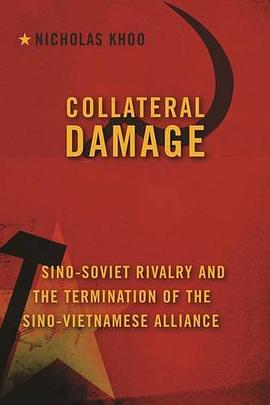
Although the Chinese and the Vietnamese were Cold War allies in wars against the French and the Americans, their alliance collapsed and they ultimately fought a war against each other in 1979. More than thirty years later the fundamental cause of the alliance's termination remains contested among historians, international relations theorists, and Asian studies specialists. Nicholas Khoo brings fresh perspective to this debate.
Using Chinese-language materials released since the end of the Cold War, Khoo revises existing explanations for the termination of China's alliance with Vietnam, arguing that Vietnamese cooperation with China's Cold War adversary, the Soviet Union, was the necessary and sufficient cause for the alliance's termination. He finds alternative explanations to be less persuasive. These emphasize nonmaterial causes, such as ideology and culture, or reference issues within the Sino-Vietnamese relationship, such as land and border disputes, Vietnam's treatment of its ethnic Chinese minority, and Vietnam's attempt to establish a sphere of influence over Cambodia and Laos.
Khoo also adds to the debate over the relevance of realist theory in interpreting China's international behavior during both the Cold War and post-Cold War eras. While others see China as a social state driven by nonmaterial processes, Khoo makes the case for viewing China as a quintessential neorealist state. From this perspective, the focus of neorealist theory on security threats from materially stronger powers explains China's foreign policy not only toward the Soviet Union but also in relation to its Vietnamese allies.
Review
Collateral Damage offers both a sophisticated analytical treatment and a comprehensive history of Sino-Vietnamese relations in the 1960s and 1970s, thus presenting a persuasive explanation of the emergence of Sino-Vietnamese friction in the 1960s and the emergence of Sino-Vietnamese animosity and war in the 1970s.
(Robert S. Ross, professor of political science, Boston College )
Nicholas Khoo returns to the roots of international relations theory to explain how the Chinese, Soviet, and Vietnamese behavior toward one another during the 1960s and 1970s because of their relative power. He uses new information released in China in the form of memoirs, scholarly works, and archival publications to tell a dramatic and in some ways tragic story with insight and vividness.
(Andrew J. Nathan, Class of 1919 Professor of Political Science, Columbia University )
Nicholas Khoo has performed a great service in offering a cogent and persuasive argument on the causes of the demise of the Sino-Vietnames alliance during the later decades of the Cold War.
(Robert Sutter H-Diplo Roundtable )
作者简介
Nicholas Khoo is a lecturer in the Department of Politics at the University of Otago, New Zealand. He received a Ph.D. from Columbia University in 2006 and an MA from Johns Hopkins University in 1998. He specializes in Chinese foreign policy, the international relations of Asia, the international politics of the Cold War, and international relations theory.
目录信息
读后感
用户评价
我习惯于在阅读时做一些笔记和标注,但读到这部作品时,我的笔几乎停不下来。它不是那种只关注情节转折的爆米花小说,而是沉淀了丰富思想内涵的作品。作者似乎对人性中的那些复杂动机了如指掌,书中每一个角色的动机都复杂交织,没有一个是扁平的符号。我尤其欣赏作者对“后果”这一概念的探讨,不仅仅是表面的行动结果,更是那些看不见的、心理上的、社会性的长期影响,如何像涟漪一样扩散开去。 这本书的阅读体验是极具沉浸感的,你不是在“看”故事,而是“生活”在故事里。文字的颗粒感很强,能够清晰地感受到作者想通过每一个词语传达的精确情绪。情节的推进并非一帆风顺,它充满了曲折和反转,但这些反转绝非为了制造噱头,而是对之前铺垫的逻辑性回应。它迫使我跳出自己的舒适区,去理解那些在道德边缘徘徊的选择。 最终,这本书留给读者的,不仅仅是一个已经结束的故事,更是一种对于“选择的重量”的深刻体悟。它具备了成为经典作品的潜质,因为它触及了人类经验中那些永恒而普遍的主题。
这部小说的结构设计堪称教科书级别。它采用了非线性的叙事手法,但处理得极为高明,没有丝毫让人迷失方向的风险。作者似乎非常擅长玩弄时间线索,将过去、现在和预示性的未来片段巧妙地交织在一起,每一次场景的切换都像是在拼凑一块复杂的巨型拼图,直到最后一块落定,整个宏伟的图案才豁然开朗。 这种叙事手法要求读者保持高度的专注力,但这绝对是值得的投入。我个人的偏好是喜欢那些需要“动脑筋”的作品,而这部书恰好满足了我的需求。它不像有些作品那样把所有线索都摆在桌面上供人取用,而是将关键信息巧妙地隐藏在细节的描述和人物的潜台词中。 深入到角色内心世界的描写也极其到位,特别是主角在面对极端压力时的心理变化过程,那种挣扎、妥协与最终的爆发,都处理得极其细腻。 这种深入灵魂的刻画,让读者能够超越故事本身,去思考更深层次的“我是谁”和“我将如何选择”。读完后,那种解谜后的成就感,混杂着对角色命运的怅惘,久久不能散去。
这部小说实在令人拍案叫绝,情节跌宕起伏,人物刻画得入木三分。作者的笔力深厚,将那种置身事外的冷峻感和内在的道德挣扎描绘得淋漓尽致。我尤其欣赏叙事中那种精妙的节奏控制,高潮部分来得迅猛却又合乎情理,让人完全沉浸其中,根本顾不上看时间。故事的核心冲突处理得极其巧妙,没有简单的黑白对立,更多的是在灰色地带游走,迫使读者不断反思自身立场。比如其中对于权力和责任边界的探讨,那种微妙的界限模糊,简直可以拿来当做社会学案例分析。阅读过程中,我好几次停下来,反复咀嚼那些富有哲理性的对白,它们不是那种空洞的说教,而是恰如其分地嵌在人物的命运轨迹之中,自然而然地流淌出来。 这种文学性的深度,使得它远超一般的通俗读物,达到了令人尊敬的高度。书中的场景描写,无论是都市的喧嚣还是人迹罕至的荒野,都栩栩如生,仿佛我本人就在那里呼吸着同样的空气,感受着那种压抑或释放的情绪。 结尾的处理更是高明,它没有给出所有问题的标准答案,而是留下了一个巨大的开放空间,让读者带着自己的思考和情感余温,久久地徘徊在故事构建的世界里,回味无穷。
对于那些追求纯粹阅读愉悦感,同时又不甘于平庸故事的读者来说,这本书简直是天赐的礼物。它的语言风格带着一种独特的韵律感,读起来朗朗上口,节奏感极强,即使是描述最残酷的场景,也带着一种奇异的美感。作者对于细节的把握达到了吹毛求疵的地步,无论是历史背景的考证,还是专业术语的运用,都显示出作者在前期做了大量的案头工作。这种扎实的功底,为故事构建了一个极其可信且坚固的基石。我特别欣赏它在保持故事紧张度的同时,还能时不时地插入一些幽默或讽刺性的片段,这些调剂品非但没有破坏整体的严肃性,反而像一把锋利的刀刃,更精准地切开了现实的荒谬。 故事的张力铺陈得极其缓慢而有力,像是一张巨大的网,慢慢收紧,让人感到窒息,却又忍不住期待下一秒的收网动作。它探讨的主题宏大而深刻,关乎个体在巨大系统面前的无力感,以及如何在这种无力感中寻找自我价值的出口。 读完后,我立刻向身边所有喜欢深度阅读的朋友们推荐了它,认为这是一部近些年来难得的佳作,值得反复品味。
我必须承认,一开始我对这部作品的期望值并不高,觉得可能又是老一套的悬疑设定。然而,一旦翻开第一页,那种扑面而来的强大叙事张力就牢牢抓住了我。它最成功的地方在于对“人性”的解剖,那种细致入微,几乎带着手术刀般的精确。书中几个主要角色,他们身上的每一个选择,无论多么令人费解或赞同,都有着坚实可信的动机支撑。我特别喜欢作者对环境氛围的营造,那种若有似无的焦虑感贯穿始终,像背景音乐一样低沉但持续地存在着,让每一次的平静都显得格外虚假和脆弱。阅读体验是极其流畅的,文字功底扎实,句式变化多端,绝不拖沓。它不是那种故作高深的文学作品,但其文学价值却不容忽视。它以一种近乎纪录片的方式,记录了一系列连锁反应,每一步都像是精密的数学公式推导出来的必然结果,但情感上却又充满了不可预测的人为因素。那些关于信任与背叛的描写,真实得令人心寒,因为它触及了人类关系中最脆弱的那部分。读完之后,我感觉自己像是完成了一次精神上的长途跋涉,身心俱疲,但精神上却获得了某种极大的满足感。