
具体描述
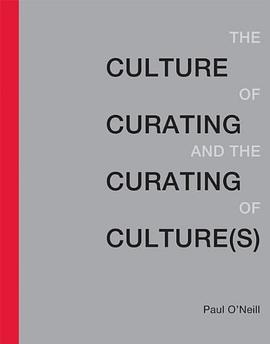
Once considered a mere caretaker for collections, the curator is now widely viewed as a globally connected auteur. Over the last twenty-five years, as international group exhibitions and biennials have become the dominant mode of presenting contemporary art to the public, curatorship has begun to be perceived as a constellation of creative activities not unlike artistic praxis. The curator has gone from being a behind-the-scenes organizer and selector to a visible, centrally important cultural producer. In The Culture of Curating and the Curating of Culture(s), Paul O'Neill examines the emergence of independent curatorship and the discourse that helped to establish it. O'Neill describes how, by the 1980s, curated group exhibitions--large-scale, temporary projects with artworks cast as illustrative fragments--came to be understood as the creative work of curator-auteurs. The proliferation of new biennials and other large international exhibitions in the 1990s created a cohort of high-profile, globally mobile curators, moving from Venice to Paris to Kassel. In the 1990s, curatorial and artistic practice converged, blurring the distinction between artist and curator. O'Neill argues that this change in the understanding of curatorship was shaped by a curator-centered discourse that effectively advocated--and authorized--the new independent curatorial practice. Drawing on the extensive curatorial literature and his own interviews with leading curators, critics, art historians, and artists, O'Neill traces the development of the curator-as-artist model and the ways it has been contested. The Culture of Curating and the Curating of Culture(s) documents the many ways in which our perception of art has been transformed by curating and the discourses surrounding it.
作者简介
目录信息
读后感
A cautious overview of curating trends that surveys the arguments for and against its rising prominence in how art works are mediated for audiences. The title is a little misleading as it does not go into detail about what culture curating/curating culture ...
A cautious overview of curating trends that surveys the arguments for and against its rising prominence in how art works are mediated for audiences. The title is a little misleading as it does not go into detail about what culture curating/curating culture ...
A cautious overview of curating trends that surveys the arguments for and against its rising prominence in how art works are mediated for audiences. The title is a little misleading as it does not go into detail about what culture curating/curating culture ...
A cautious overview of curating trends that surveys the arguments for and against its rising prominence in how art works are mediated for audiences. The title is a little misleading as it does not go into detail about what culture curating/curating culture ...
A cautious overview of curating trends that surveys the arguments for and against its rising prominence in how art works are mediated for audiences. The title is a little misleading as it does not go into detail about what culture curating/curating culture ...
用户评价
这本书的装帧设计简直是一场视觉盛宴,那种厚重的质感,搭配上封面那种略带复古的字体排版,初次上手时就给人一种“这不是一本普通的书”的强烈预期。内页的纸张选择也相当考究,墨色的晕染度和文字的清晰度达到了近乎完美的平衡,即使是长时间沉浸其中,眼睛也不会感到明显的疲劳。我特别欣赏作者在章节过渡部分所使用的那些微妙的留白和边框装饰,它们不是那种花哨的图腾,而更像是策展人精心挑选的“展品标签”,引导着读者的思绪从一个主题优雅地滑向下一个。这种对物理形态的重视,本身就在向“策展”这一行为致敬,仿佛这本书本身就是一个微型的、值得被细细品味的展览空间。翻阅的过程中,那种指尖与纸张接触的细微摩擦声,都为阅读体验增添了一层独特的听觉享受,让人不禁放慢速度,去感受每一页背后的匠心。可以说,在信息爆炸的今天,这本书在实体媒介上的用心程度,已经超越了内容本身,成为了一种值得收藏的工艺品。
书中展现出的那种批判性的、审视性的目光,是这本书最有价值的“调味料”。它并没有沉溺于对“策展”行为的赞美或工具性解读,相反,它毫不留情地揭示了这种行为背后可能存在的权力固化、精英主义的倾向,以及如何通过看似中立的展示方式来构建和维护特定的意识形态叙事。这种批判是尖锐而又克制的,它不是简单的道德谴责,而是基于深刻的结构性分析。每当我认为自己已经理解了某个概念的正面意义时,作者总能及时地提出一个反例或者一个“阴影面”,迫使我停下来重新评估。这种不断自我审视、拒绝被轻易定义的态度,使得全书始终保持着一种必要的张力和活力,避免了沦为一本僵硬的行业指南。它教会我,任何形式的“组织”和“呈现”,都必然包含着一种选择和排除,而这些选择,恰恰是需要我们时刻保持警惕和反思的核心地带。
这本书的行文风格中,透露着一种罕见的、近乎“仪式感”的庄重,但这种庄重并非源于故作高深,而是源于对所探讨对象的深切尊重和严肃对待。阅读过程中,你能明显感受到作者的用词极其精准,每一个动词、每一个形容词的选择都经过了深思熟虑,力求传达最细微的语义差别。它不像一些学术著作那样充斥着晦涩的术语堆砌,而是将复杂的概念用富有画面感和触感的语言进行包裹。这使得原本可能显得冷峻的理论探讨,也充满了人文的温度和哲学的思辨色彩。例如,作者描述某些文化现象的“消逝”或“重构”时,所使用的那种细腻的情感表达,仿佛在描绘一幅正在被时间侵蚀的壁画。这种兼具学理性与文学性的表达张力,极大地提升了阅读的愉悦度,让知识的汲取过程,变成了一场与作者进行深度对话的、充满美感的智力探险。
作者在文本中引用的外部资源和交叉引用的深度,令人叹为观止。它绝非孤立地讨论某一特定领域的问题,而是像一个高明的连接者,将艺术史、社会学理论、人类学观察,甚至是早期的技术哲学,巧妙地编织成一张巨大的知识网。我注意到一些提及的学者和理论框架,它们本身可能并不直接与“策展”一词相关,但作者却能精准地提炼出其中的方法论精髓,并将其有效地迁移到新的语境中。例如,他对某一特定历史时期社会权力结构的反思,被用来剖析当代博物馆的“选择性记忆”时,那种豁然开朗的感觉,是普通读物很难提供的。这种跨学科的广度和深度,要求读者必须保持高度的思维活跃度,去捕捉那些潜藏在不同学科表象之下的共通主题。这已经超越了简单的文献综述,更像是一次高强度的智力体操,极大地拓宽了我对知识边界的想象空间。
这本书的叙事节奏掌握得极其精妙,它没有采用那种教科书式的、线性推进的论述结构,而是像一个经验老到的纪录片导演在剪辑素材。开篇的引子部分,那种近乎散文诗般的笔触,一下子就将你拉入一个模糊而又充满张力的氛围之中,让人对即将展开的论述充满了好奇和敬畏。随后,作者似乎有意地在关键节点设置了几个“引爆点”,通过一系列看似跳跃却又暗藏逻辑的案例分析,不断地挑战着我们对既有概念的固有认知。我最佩服的是它在处理复杂议题时的“留白艺术”——它不会把所有答案都掰碎了喂给你,而是抛出一个引人深思的悖论,然后让你自己去填补那些空白。这种主动性要求让读者不再是被动的接收者,而更像是一个共同的“诠释者”。这种时而快进、时而慢放的叙事手法,极大地避免了主题的枯燥化,保证了即便是面对高深的理论时,阅读的流畅性也丝毫不受影响。读完整本书,就像是跟随一位大师走完了一场精心规划的智力迷宫。
策展在向着关于策展人的展览,展览本身作为一次艺术行为,以及话题性展览的方向发展
策展在向着关于策展人的展览,展览本身作为一次艺术行为,以及话题性展览的方向发展
策展在向着关于策展人的展览,展览本身作为一次艺术行为,以及话题性展览的方向发展
讲述策展文化发展很到位。就是部头有点大,一些专访摘录再加上作者自己理解就太冗杂了。
讲述策展文化发展很到位。就是部头有点大,一些专访摘录再加上作者自己理解就太冗杂了。