具体描述
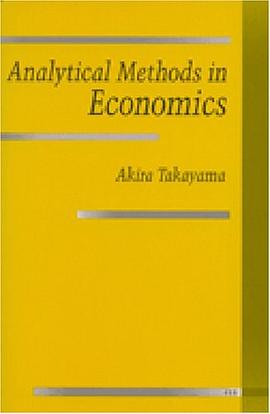
This book is an introduction to calculus and linear algebra for students of disciplines such as economics, finance, business, management, and accounting. It is intended for readers who may have already encountered some differential calculus, and it will also be appropriate for those with less experience, possibly used in conjunction with one of the many more elementary texts on basic mathematics.
作者简介
目录信息
1. Mathematical models in economics
1.1 Introduction
1.2 A model of the market
1.3 Market equilibrium
1.4 Excise tax
1.5 Comments
Worked examples
Main topics/Key terms notations and formulae
Exercises
2. Mathematical terms and notations
2.1 Sets
2.2 Functions
2.3 Composite functions
2.4 Graphs and equations
Worked examples
Main topics/Key terms notations and formulae
Exercises
3. Sequences, recurrences, limits
3.1 Sequences
3.2 The first-order recurrence
3.3 Limits
3.4 Special cases
Worked examples
Main topics/Key terms, notations and formulae
Exercises
4. The elements of finance
4.1 Interest and capital growth
4.2 Income generation
4.3 The interval ofcompounding
Worked examples
Main topics/Key terms notations and formulae
Exercises
5. The cobweb model
5.1 How stable is market equilibrium?
5.2 An example
5.3 The general linear case
5.4 Economic imerpretation
Worked examples
Main topics/Key terms notations and formulae
Exercises
6. Introduction to calculus
6.1 The rate ofchange of a function
6.2 Rules for finding the derivative
6.3 Marginal cost as a derivative
6.4 The derivative of a composite function
6.5 The derivative ot' an inverse function
Worked examples
Main topics/Key terms notations and tbrmulae
Exercises
7. Some special functions
7.1 Powers
7.2 The exponential function and its properties
7.3 Continuous compounding of interest
7.4 The logarithm function
7.5 Trigonometrical t'unctions
Worked examples
Main topics/Key terms notations and formulae
Exercises
8. Introduction to optimisation
8.1 Profit maximisation
8.2 Critical points
8.3 Optimisation in an interval
8.4 Infinite intervals .
Worked examples
Main topics/Key terms notations and formulae
Exercises
9. The derivative in economics-1
9.1 Elasticity of demand
9.2 Profit maximisation again
9.3 Competition versus monopoly
Worked examples
Main topics/Key terms notations and formulae
Exercises
10. The derivative in economics--11
10.1 The efficient small firm
10.2 Startup and breakeven points
Worked examples
Main topics/Key terms notations and formulae
Exercises
11. Partial derivatives
11.1 Functions of several variables
11.2 Partial derivatives
11.3 The chain rule
Worked examples
Main topics/Key terms notations and formulae
Exercises
12 Applications of partial derivatives
12.1 Functions defined implicitly
12.2 The derivative of an implicit function
12.3 Contours and isoquants
12.4 Scale effects and homogeneous functions
Worked examples
Main topics/Key terms notations and formulae
Exercises
13 Optimisation in two variables
13.1 Profit maximisation again
13.2 How prices are related to quantities
13.3 Critical points
13.4 Maxima, minima, and saddle points
13.5 Classification of critical points - introduction
13.6 The classification of critical points in general
Worked examples
Main topics/Key terms, notations and formulae
Exercises
14. Vectors preferences and convexity
14.1 Vectors and bundles
14.2 Prices and budgets
14.3 Preferences, utility, and indifference curves
14.4 Linear and convex combinations
14.5 Choosing optimal bundles
Worked examples
Main topics/Key terms, notations and formulae
Exercises
15. Matrix algebra
15.1 What is a matrix?
15.2 Matrix multiplication
15.3 How to make money with matrices
Worked examples
Main topics/Key terms notations and formulae
Exercises
16. Linear equations-1
16.1 A two-industry 'economy
16.2 Linear equations in matrix form
16.3 Solutions of linear equations by row operations
16.4 The echelon form in general
Worked examples
Main topics/Key terms, notations and formulae
Exercises
17. Linear equations-11
17.1 Consistent and inconsistent systems
17.2 The rank of a consistent system
17.3 The general solution in vector notation
17.4 Arbitrage portfolios and state prices
Worked examples
Main topics/Key terms, notations and formulae
Exercises
18. Inverse matrices
18.1 The square linear system
18.2 The inverse of a square matrix
18.3 Calculation of the inverse
18.4 The inverse of a 2x2 matrix
18.5 IS-LM analysis
Worked examples
Main topics/Key terms notations and formulae
Exercises
19. The input-output model
19.1 An economy with many industries
19.2 The technology matrix,
19.3 Why is there a solution?.
Worked examples
Main topics/Key terms, notations and formulae
Exercises
20. Determinants
20.1 Determinants
20.2 The determinant as a test for invertibility
20.3 Cramer's rule
Worked examples
Main topics/Key terms, notations and formulae
Exercises
21. Constrained optimisacion
21.1 The elementary theory of the firm
21.2 The method of Lagrange multipliers
21.3 The cost function
21.4 The efficient small firm again
21.5 The Cobb-Douglas firm
Worked examples
Main topics/Key terms, notations and formulae
Exercises
22. Lagrangeans and the consumer
22.1 Lagrangeans: a more general formulation
22.2 The elementary theory of the consumer
22.3 The price ratio and the tangency condition
22.4 The consumer's demand functions
22.5 The indirect utility function
Worked examples
Main topics/Key terms, notations and formulae
Exercises
23. Second-order recurrence equations
23.1 A simplified national economy
23.2 Dynamics of the economy
23.3 Linear homogeneous recurrences
23.4 Non-homogeneous recurrences
Worked examples
Main topics/Key terms notations and formulae
Exercises
24. Macroeconomic applications
24.1 Recurrence equations in practice
24.2 Oscillatory solutions
24.3 Business cycles
24.4 Improved models of the economy
Worked examples
Main topics/Key terms notations and formulae
Exercises
25 Areas and integrals
25.1 The consumer surplus
25.2 The concept of area
25.3 Anti-derivatives and integrals
25.4 Definite integrals
25.4 Standard integrals
Worked examples
Main topics/Key terms notations and formulae
Exercises
26. Techniques of integration
26.1 Integration by substitution
26.2 Definite integrals by substitution
26.3 Integration by parts
26.4 Partial fractions
Worked examples
Main topics/Key terms notations and formulae
Exercises
27. First-order differential equations
27.1 Continuous-time models
27.2 Some types of differential equations
27.3 Separable differential equations
27.4 A continuous-time model of price adjustment
Worked examples
Main topics/Key terms notations and formulae
Exercises
28. Second-order differential equations
28.1 Market trends and consumer demand
28.2 Linear equations with constant coefficients
28.3 Solution of homogeneous equations
28.4 Non-homogeneous equations
28.5 Behaviour of solutions
Worked examples
Main topics/Key terms notations and formulae
Exercises
Solutions to selected exercises
Index
· · · · · · (收起)
读后感
用户评价
这本《经济数学和金融数学》确实是让我眼前一亮的作品,书名直观地指出了它所涵盖的领域,但实际内容远比我想象的要丰富和深入。我原本以为它会是一本纯粹的理论堆砌,充斥着枯燥的公式和推导,但它巧妙地将经济学和金融学的实际问题与严谨的数学工具相结合,让那些原本抽象的概念变得生动起来。书中不仅仅是罗列了各种模型和定理,更重要的是,它通过大量的案例分析,展现了这些数学工具在解决现实经济金融问题时的强大威力。例如,在讨论期权定价时,作者没有止步于Black-Scholes模型本身,而是详细讲解了模型的假设条件,并进一步探讨了当这些假设不再成立时,如何对模型进行修正,以及这些修正如何在实践中指导交易决策。这一点让我印象特别深刻,因为它真正体现了理论与实践的无缝衔接。此外,书中在讲解一些较为复杂的数学概念时,比如随机过程,也提供了非常清晰的直观解释,即使是对数学不太精通的读者,也能逐步理解其核心思想。这种循序渐进的教学方式,使得这本书既适合有一定数学基础的专业人士,也对希望快速入门的初学者非常友好。我尤其喜欢书中对于模型局限性的讨论,这是一种非常负责任的学术态度,也让我对经济金融模型的理解更加全面和辩证。
我必须承认,当我翻开《经济数学和金融数学》这本书时,我抱持着一种半信半疑的态度。经济学和金融学本就是涉及复杂社会互动和人类行为的学科,用冰冷的数学去衡量和预测,总感觉有种捉襟见肘的局限性。然而,这本书彻底改变了我的看法。作者以一种非常独特且富有洞察力的方式,将数学的严谨逻辑渗透进了经济金融的各个角落。我被书中对于均衡模型的一系列论述所深深吸引,它不仅仅是介绍了静态的均衡概念,更是通过动态调整过程的数学描述,让我们看到经济系统是如何趋于稳定的,或者在何种条件下会发生振荡甚至崩溃。书中在讲解宏观经济模型时,对于变量之间的相互作用和反馈机制的刻画,简直如同绘制了一幅精密的经济运行图。我特别注意到作者在描述金融衍生品时,是如何利用鞅论来处理不确定性,以及如何在信息不对称的条件下构建最优的风险管理策略。这些内容在我看来,已经远超出了教科书的范畴,更像是一份关于如何用数学思维来解构和理解经济金融世界的高阶指南。书中并没有回避那些棘手的、难以量化的问题,反而通过引入概率论、优化理论等工具,试图为这些问题提供一种分析框架。这种尝试本身就极具启发性,让我对经济金融学科的发展前景充满了好奇。
《经济数学和金融数学》这本书,给我最大的感受是它将经济金融的理论与现实世界的复杂性紧密地联系在了一起。我之前总觉得很多理论模型过于理想化,脱离实际。但这本书通过对“博弈论”在市场竞争、拍卖理论等方面的应用进行深入分析,让我看到了数学工具如何在描述策略互动和预测结果方面发挥作用。书中在讲解“公司金融”时,对于资本结构优化的数学模型,以及股息政策的理论推导,都给我留下了深刻的印象。作者并没有回避那些复杂的数学推导,但他在关键的地方都进行了详细的解释,并且强调了这些模型背后的经济学含义。我特别喜欢书中对于“国际金融”中汇率模型的讨论,它涉及了购买力平价理论、利率平价理论等,并通过数学模型来解释汇率的波动性。这种将宏观经济理论与微观金融决策相结合的处理方式,让我对经济金融体系的理解更加立体和全面。这本书让我明白,经济金融领域的挑战,并非不可逾越,而是需要我们以一种系统化、数学化的思维去应对。它教会了我如何用更严谨的逻辑去审视经济现象,以及如何运用数学工具去寻找更优的解决方案。
读完《经济数学和金融数学》这本书,我的思维方式仿佛被彻底重塑了。以往我对经济金融的理解,更多是基于一些定性的描述和直观的感受,而这本书则为我打开了一扇通往定量分析的大门。我被书中对于“计量经济学”方法的介绍所震撼,它不仅仅是简单地介绍回归分析,更是深入探讨了内生性、工具变量等解决模型偏差问题的核心技术,并结合了具体的金融数据进行案例分析,让我看到了如何从海量数据中挖掘出有价值的经济信息。书中在讲解“时间序列分析”时,对于ARIMA模型、GARCH模型等的详细阐述,以及它们在预测股票价格、通货膨胀等方面的应用,都让我印象深刻。我尤其欣赏作者在讨论“风险管理”时,如何运用极值理论来评估极端事件的发生概率,以及如何通过蒙特卡罗模拟来对投资组合的风险进行度量。这些内容并非易懂,但作者以一种极其耐心和清晰的方式,逐步引导读者理解其背后的数学原理和实际意义。这本书让我意识到,经济金融的奥秘,很大程度上隐藏在数字和公式之中,而掌握了这些工具,就如同掌握了一把解锁这些奥秘的钥匙。
《经济数学和金融数学》这本书,就像是一位经验丰富的向导,带领我在经济金融的广袤天地里探索。它没有给我提供现成的答案,但它教会了我如何去提问,以及如何用一种更系统、更精确的方式来寻找答案。书中对于“一般均衡理论”的阐述,让我第一次真正理解了市场经济是如何通过价格信号实现资源最优配置的。作者并不是简单地给出模型公式,而是通过一系列图示和文字说明,逐步揭示了消费者效用最大化、生产者利润最大化以及市场出清条件是如何在数学上相互依存的。我尤其欣赏书中对“最优控制理论”的应用,它在解释企业的长期投资决策、政府的财政政策制定等方面,都展现了强大的解释力。书中没有回避数学的复杂性,但它总能在关键时刻提供直观的解释,让你明白为什么需要引入某个数学工具,以及这个工具在实际应用中扮演的角色。我记得在阅读关于“行为金融学”的章节时,书中结合了心理学和经济学的研究成果,并尝试用数学模型来解释一些看似非理性的市场现象,例如羊群效应和过度自信。这种跨学科的融合,让我对经济金融研究的边界有了更深的认识。这本书让我明白,数学不仅仅是工具,它更是理解经济金融世界底层逻辑的一种语言。